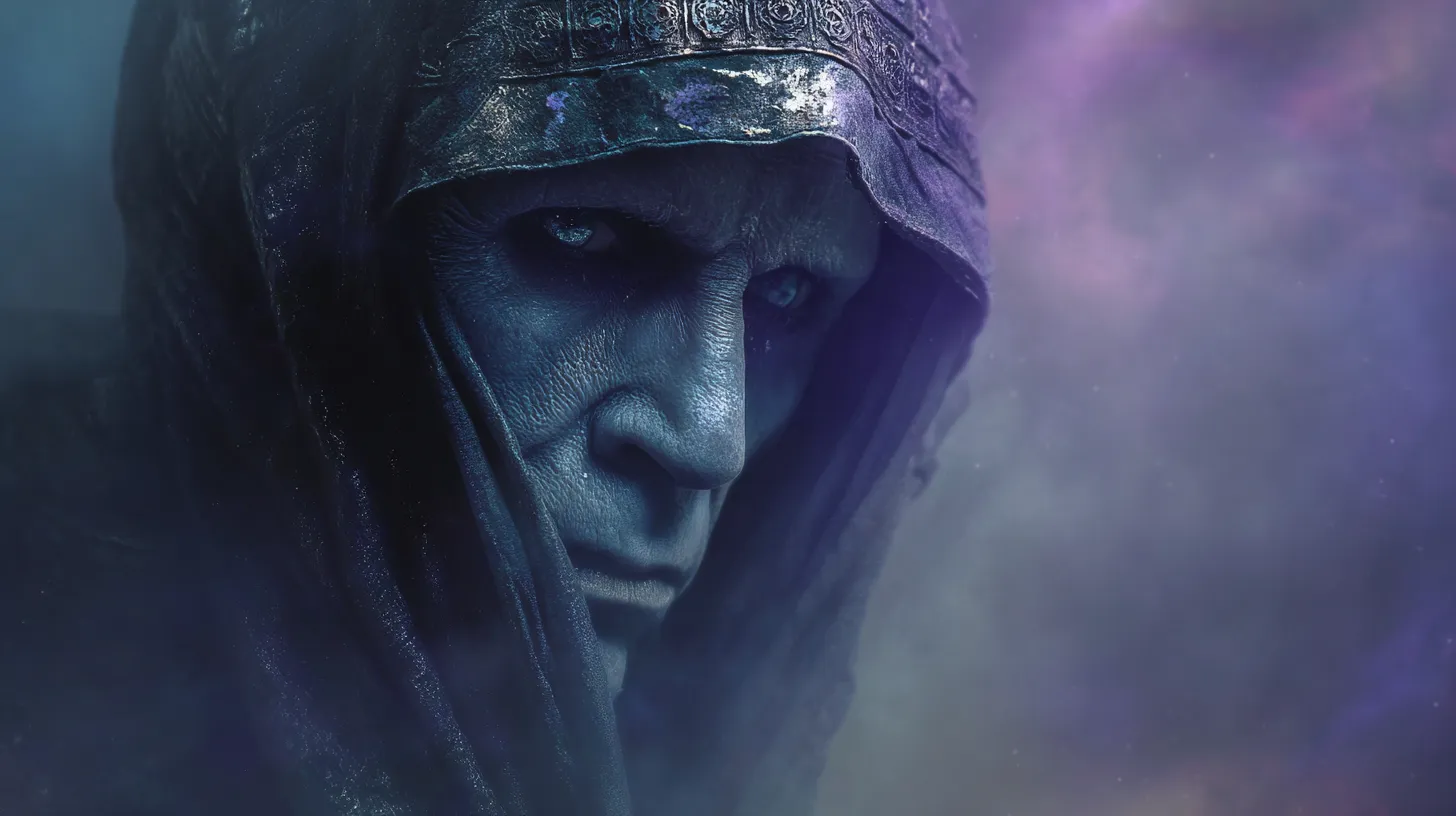
The Mule
A mysterious mutant with mental powers who nearly destroyed the Seldon Plan.
Quick Summary
The Mule is the primary antagonist of Foundation and Empire. A mutant with the power to manipulate emotions, he conquered the Foundation and nearly destroyed the Seldon Plan—proving psychohistory's inability to predict random individual mutations.
Last updated: 2026-09-23
Appears In
- Foundation and Empire
- Second Foundation
Key Traits
- Mutant
- Mentalic
- Conqueror
- Emotion Manipulator
Importance
The Unknown Variable in the Foundation saga
My Take
I didn't see the twist coming. I love the Mule storyline, yet I've never much liked the Mule himself, and I still can't quite say why. As for the TV version, I didn't like Season 3 turning Bayta into the Mule. I would rather the show stayed closer to the book.
— Jason Guo, editor
In the entire Foundation series, no character is more important, or more subversive, than the Mule. He is the anomaly that psychohistory could not predict, the individual who proves that even the most perfect mathematical model of human behavior has a fatal flaw.
The Mule doesn't just threaten the Seldon Plan. He breaks it. And in doing so, he forces the Foundation universe to confront the deepest question at the heart of Asimov's work: can history truly be predicted, or does free will ultimately triumph over statistical destiny?
Who Is the Mule?
The Mule is a mutant born with an unprecedented ability to sense and manipulate human emotions. Unlike the Second Foundation's trained mentalics, whose powers are subtle and limited, the Mule can Convert almost anyone to his cause, completely and for as long as he lives. His victims don't just obey him: they genuinely want to serve him. Their emotional loyalties to family, ideology, and even self-preservation are rewritten.
He first appears in Foundation and Empire (1952) disguised as Magnifico Giganticus, a pathetic-seeming clown and musician who claims to have escaped from the Mule's court. He travels with protagonists Toran and Bayta Darell as they search for the Second Foundation, seemingly a harmless companion.
The reveal that Magnifico is the Mule is one of the greatest plot twists in science fiction. In retrospect, the clues are everywhere: Magnifico's unusual emotional sensitivity, his ability to "calm" hostile situations, the way opponents mysteriously lose their will to fight.
The Mule's Conquest
The Mule's campaign against the Foundation is shockingly swift. In a matter of months, he conquers what had taken the Foundation 300 years to build. His method is devastatingly simple: he doesn't need armies or weapons. He simply converts enemy leaders to his cause, turning their loyalty and strategic knowledge against their own people.
Key moments in his conquest:
-
The Fall of the Foundation: The Foundation's allies and commanders are Converted one by one. Captain Han Pritcher, a Foundation intelligence officer who goes to Kalgan to deal with the Mule, becomes his most devoted general instead.
-
The Fall of Terminus: For the first time in its 300-year history, the Foundation falls to an outside conqueror. The Time Vault opens on schedule, but Seldon's recording addresses a crisis that is not happening: a civil war with the Independent Trading Worlds, not a mutant warlord. It's the most chilling moment in the series: the Plan has gone off the rails.
-
The Search for the Second Foundation: Knowing the Second Foundation is his only remaining threat, the Mule launches a desperate search before its mentalics can stop him.
Why Psychohistory Failed
The Mule represents the fundamental limitation of psychohistory. Hari Seldon's mathematics works on populations: billions or trillions of people whose individual actions cancel out into predictable statistical patterns. But psychohistory explicitly cannot account for exceptional individuals who can single-handedly alter the course of history.
This isn't a bug; it's a design constraint. Psychohistory is modeled on the kinetic theory of gases: you can predict the behavior of a gas (pressure, temperature, volume) without knowing the trajectory of any individual molecule. But what if one molecule had the mass of a planet? The model breaks.
The Mule is that molecule. His emotional manipulation powers give him an outsized influence on events that no statistical model could anticipate. He is, in essence, a one-man Seldon Crisis that Seldon never predicted.
Asimov was making a profound philosophical point: any system that claims to predict human behavior must contend with the possibility of unprecedented outliers. In our world, this maps to figures like Napoleon, Hitler, or Alexander the Great: individuals whose unique combination of charisma, talent, and historical circumstance allowed them to reshape civilizations in ways no sociological model could have anticipated. Nassim Nicholas Taleb later formalized a similar concept as "Black Swan events" in his 2007 book.
Bayta's Act of Free Will
The Mule's first real setback is one of the most elegant plot resolutions in science fiction. It comes not from military power, not from the Second Foundation, and not from psychohistory, but from a single act of genuine free will.
Bayta Darell, the one person the Mule never converted (because he genuinely liked her), realizes the truth: Magnifico is the Mule. At the moment when the psychologist Ebling Mis is about to reveal the location of the Second Foundation, which would allow the Mule to destroy it, Bayta kills Mis.
This act is crucial for three reasons:
-
It is unmotivated by the Mule's powers. Because the Mule never converted Bayta, her action comes from genuine free will, not emotional manipulation.
-
It saves the Second Foundation. With Mis dead, the Mule cannot find the Second Foundation and must continue his search, giving the Second Foundation time to prepare.
-
It proves that individual free will can trump both psychohistory AND emotional manipulation. Neither Seldon's math nor the Mule's powers could predict or control this moment.
Asimov was answering his own question: yes, psychohistory can be broken, but not by another system. Only by the unpredictable spark of individual conscience.
The Mule's Defeat in Second Foundation
In Second Foundation (1953), the Mule's story concludes. Years later, he sends two agents to find it: the Converted Han Pritcher and Bail Channis, a young man the Mule deliberately left unconverted. The Second Foundation, led by its unnamed First Speaker, answers with a deception of its own: Channis is secretly one of its agents, and the trail he follows to Tazenda is false. The Mule has Tazenda destroyed, believing he has found his enemy, but neither Tazenda nor its subject world Rossem was ever the Second Foundation.
The key insight is that the Second Foundation doesn't defeat the Mule through raw mental power: he's stronger than any individual Speaker. Instead, they use his own psychology against him. The Mule is fundamentally lonely, having never been accepted by normal humans. His desperate need for the Second Foundation's destruction is really a projection of his own isolation.
The First Speaker subtly adjusts the Mule's emotional makeup, not removing his powers but dampening his ambition and aggression. The Mule returns to Kalgan and rules peacefully until he dies of natural causes about five years later, and his Union of Worlds breaks apart after his death. The Seldon Plan, though damaged, is recoverable.
The Mule in the Apple TV+ Series
The Apple TV+ adaptation introduces the Mule in Season 3, with significant changes from the books:
- Pilou Asbæk plays the Mule as an open warlord who seizes Kalgan in the first episode, rather than a hidden threat revealed at the end
- A flashback gives him an origin on the farming world of Rossem, something the novel never provides
- Toran and Bayta become Toran and Bayta Mallow, and Magnifico is a separate character rather than the Mule in disguise
- The finale inverts the book's twist: the Mule Gaal kills is only a puppet, and the real Mule is Bayta herself
The show keeps the feeling of the storyline, the horror of a weapon you can't fight and the despair of watching the Seldon Plan crumble, while telling a different story. Book readers should expect a reinvention, not an adaptation.
The Mule's Legacy
The Mule's impact on the Foundation universe extends far beyond his own storyline:
On the Seldon Plan: The Mule's conquest set the Plan back by several decades. The Second Foundation's intervention to stop him required revealing their existence, which created a new crisis: the First Foundation's paranoia about mental manipulation.
On the Second Foundation: The Mule's defeat validated the Second Foundation's role as hidden guardians, but it also exposed them. The search for the Second Foundation in the second half of Second Foundation is a direct consequence of the Mule's reign.
On the Philosophy of the Series: The Mule fundamentally changes what the Foundation series is about. Before him, it's a story about the triumph of historical forces over individuals. After him, it becomes a story about the tension between determinism and free will, a far richer and more nuanced theme.
On Science Fiction: The Mule is an early, influential version of a now-familiar idea: a single anomaly that breaks a system everyone trusted to be predictable.
Why the Mule Endures
The Mule endures because he asks a question that science fiction, and science itself, still can't answer: Is history truly deterministic, or can a single exceptional individual change everything?
In our age of big data, machine learning, and predictive algorithms, the question is more relevant than ever. We build models that predict elections, markets, and pandemics. We trust statistical patterns over individual anecdotes. But every model has its Mule: the black swan event, the unprecedented outlier, the human being who refuses to behave as the data says they should.
The Mule isn't just Foundation's greatest villain. He's Asimov's reminder that the universe is always bigger, stranger, and more unpredictable than any equation can capture.
Related Characters & Key Relationships
Continue from The Mule into the allies, rivals, and successors who shape the same arc.
Bayta Darell
The woman who discovered his true identity and prevented him from finding the Second Foundation.
Ebling Mis
The Foundation psychologist whose search for the Second Foundation he secretly drove, disguised as the clown Magnifico.
Hari Seldon
The architect of the plan he nearly destroyed, representing order against his chaos.
Preem Palver
The later First Speaker who led the Second Foundation's final effort to repair the damage the Mule had done to the Plan.
Continue Exploring
More Paths From The Mule
Move from the character profile into the concepts and articles that explain their role in the wider Foundation universe.
Related Concepts
Science
Mentalics
Mentalics is the discipline of mental manipulation practiced by members of the Second Foundation. It encompasses the ability to sense, read, and alter human emotions and thoughts—a psychic science that complements the mathematical predictions of psychohistory.
ContinueEvent
Seldon Crisis
A Seldon Crisis is a pivotal historical moment predicted by psychohistory where the Foundation faces an existential threat with only one viable solution. These crises serve as checkpoints in the Seldon Plan, ensuring civilization stays on the path toward a Second Galactic Empire.
ContinueStrategy
The Seldon Plan
The Seldon Plan is a millennium-long strategy devised by Hari Seldon using psychohistory to shorten the predicted 30,000-year dark age following the Galactic Empire's fall to just 1,000 years.
ContinueRelated Reading
Locations
Terminus: The Foundation at the Edge of the Galaxy
From a lonely outpost to the seed of a new Empire. Discover the history of Terminus, the home of the First Foundation.
ContinueConcepts
Psychohistory Is About Control, Not Prophecy: The Foundation Warning Everyone Misses
Silicon Valley reads Foundation as a dream of predicting society. Read it again: psychohistory only works through secrecy, manipulation, and a hidden elite steering billions. Asimov wasn't describing a science we should want. He was describing the one we built.
ContinueScience
The Science of Psychohistory: Predicting the Future
Unraveling the mathematical sociology developed by Hari Seldon to predict the fall of the Galactic Empire and shorten the dark ages.
ContinueFrequently Asked Questions About The Mule
What is the Mule's real name in Foundation?
The Mule's true identity is never revealed in the books. He disguises himself as 'Magnifico Giganticus,' a harmless clown, while secretly conquering the galaxy. His birth name remains unknown—he is only known by his epithet 'the Mule,' a reference to the sterile hybrid animal, as he is a genetic dead-end incapable of passing on his mutation.
How did the Mule nearly destroy the Seldon Plan?
The Mule's unprecedented mentalic abilities allowed him to convert entire populations to his cause by manipulating their emotions. Since psychohistory cannot predict the actions of exceptional individuals, his conquests threw the Seldon Plan into chaos. He conquered the First Foundation and nearly located the Second Foundation before being stopped by Bayta Darell.
How was the Mule defeated?
The Mule was ultimately stopped through two events: First, Bayta Darell killed Ebling Mis before he could reveal the Second Foundation's location. Then, the Second Foundation used its own mental powers to subtly manipulate the Mule, dampening his drive to find them. He spent the rest of his life, about five more years, as a peaceful ruler, and his Union of Worlds broke apart after his death.
Who plays the Mule in Foundation TV series?
The Mule is played by Danish actor Pilou Asbæk in the Apple TV+ adaptation. The character appears in Season 3 (2025), which is set 152 years after Season 2 and adapts elements from 'Foundation and Empire.'