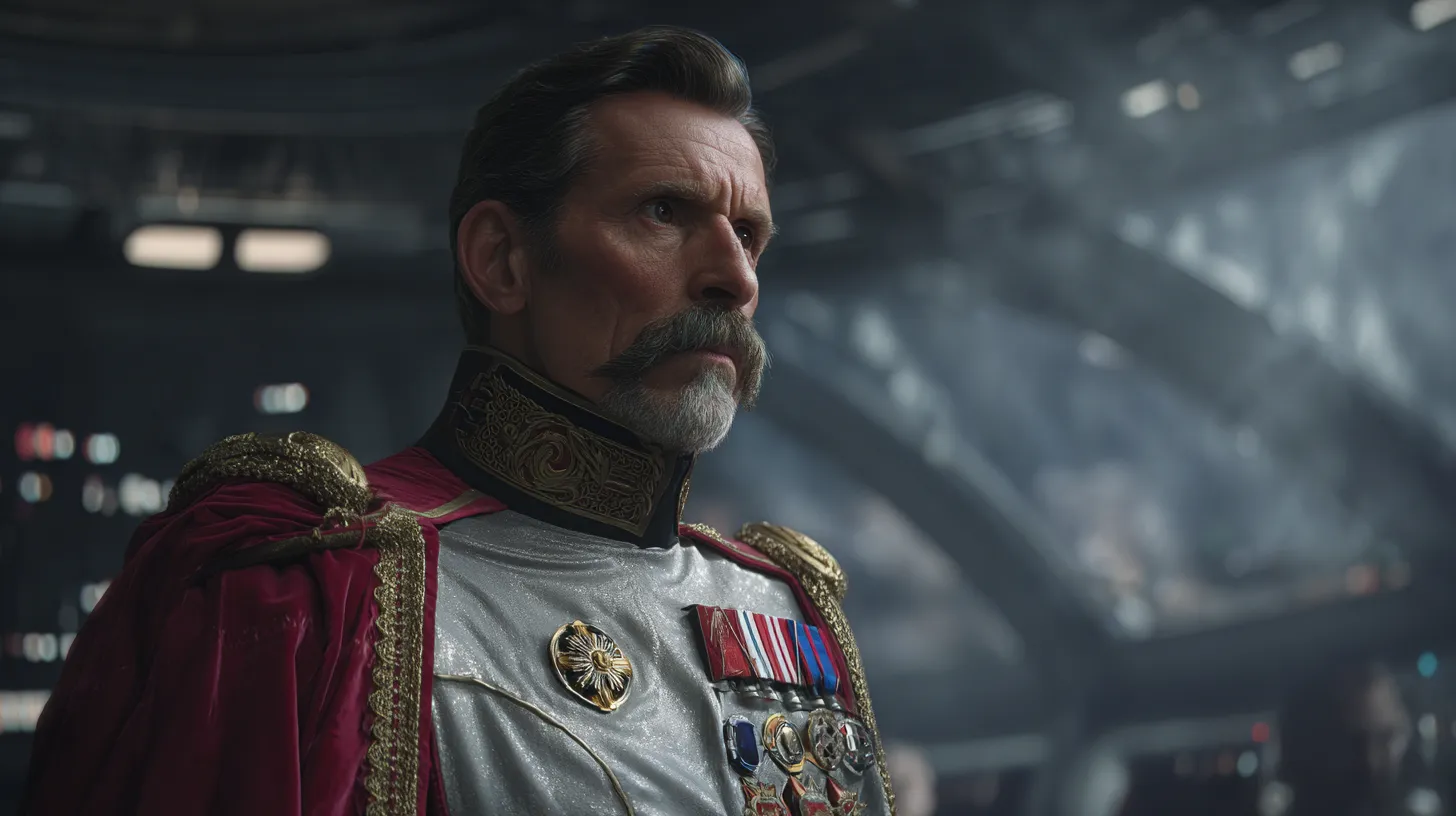
Foundation and Empire
by Isaac Asimov
Foundation and Empire (1952) is the second novel in the Foundation trilogy. It tells two stories: the Foundation's victory over the Empire's last great general Bel Riose, and its devastating defeat by the Mule, an unpredictable mutant whose emotional powers shatter the Seldon Plan.
Published
1952
Pages
247
Pub. Order
#2
Chron. Order
#11
Recognition & Milestones
Hugo Award for Best All-Time Series (1966, as part of the trilogy)
Synopsis
The novel is divided into two parts. In 'The General,' the Foundation faces Bel Riose, the last competent military commander of the declining Galactic Empire. Despite Riose's tactical brilliance, the forces of psychohistory prove stronger than any individual — the Emperor recalls and executes Riose, fearing his growing power more than the Foundation's threat.
In 'The Mule,' the Foundation faces an entirely new kind of threat: a mutant warlord who can manipulate human emotions. The Mule conquers the Foundation in a matter of months, rendering psychohistory useless — because psychohistory cannot predict the actions of unique individuals. Toran and Bayta Darell, along with the clown Magnifico (secretly the Mule himself), search for the Second Foundation as their last hope.
The novel's climax reveals that Bayta Darell, the only person the Mule never converted, saves the galaxy by killing Ebling Mis before he can reveal the Second Foundation's location. Her act of free will — unmotivated by the Mule's control — is the one factor he never anticipated.
Reader's Guide
How the Book Is Built
Foundation and Empire has two long parts, both first serialized in Astounding Science Fiction in 1945.
- "The General" (first published as "Dead Hand," April 1945) is set about two centuries after the Foundation began. The Empire's last capable general, Bel Riose, attacks the Foundation from Siwenna, advised against it by the old patrician Ducem Barr, while the trader Lathan Devers tries to stop him from the inside.
- "The Mule" (November and December 1945) jumps forward roughly a century. The Foundation is now ruled by a decadent hereditary mayor, Indbur III, and a mutant conqueror called the Mule is sweeping across the Periphery.
The two halves are deliberately paired. The first shows the Seldon Plan at its most unstoppable; the second shows it breaking.
What to Watch For
Why Riose loses. In "The General," nobody on the Foundation's side outsmarts Riose. Devers's schemes fail. Riose loses anyway, because a strong general under a weak emperor is a threat to the throne, and the Emperor Cleon II recalls him. That is psychohistory at its purest: a result that does not depend on anyone's cleverness. Barr explains the logic to Riose long before it happens.
The clues to the Mule. "The Mule" is a mystery, and Asimov plays fair. Watch Magnifico Giganticus, the frightened clown with the Visi-Sonor, and notice what happens to people's courage and loyalty whenever he is nearby. On a second reading, the clues are everywhere.
The Time Vault scene. The most famous scene in the book comes when the vault opens on schedule and Seldon calmly discusses a crisis that is not happening. It is the moment the reader realizes the Plan has gone wrong, and it lands because the first book trained you to trust those recordings.
Bayta. Bayta Darell is the only person in the story who works out who the Mule is, and her decision at the climax is the book's answer to its own question about free will. It is also one of the earliest great heroines in the genre.
Where It Fits and Who It's For
Read it straight after Foundation, in either reading order. Many readers think it is the strongest book in the original trilogy, largely because of "The Mule," which later won a Retro Hugo Award. It is more character-driven and more suspenseful than the first book, and it deliberately breaks the pattern the first book set up.
The ending is not the end: the Mule's story concludes in Second Foundation, so plan to continue.
Spoiler note: avoid the book's back-cover copy, film summaries, and the TV series if you want the Mule's identity to surprise you.
On Screen
Season 2 of the Apple TV+ series adapts Bel Riose and Ducem Barr fairly recognizably, although Barr's fate is changed and Riose is given a husband and a larger role. Season 3 is built around the Mule, but it keeps the setting and names rather than the story. Toran and Bayta become Toran and Bayta Mallow, Magnifico is a separate character, and the finale reverses the book's twist by making Bayta herself the Mule.
Key Themes
Historical Context & Writing Background
Published in 1952, this novel was assembled from two novellas: 'Dead Hand' (April 1945) and 'The Mule)' (November–December 1945), both from Astounding Science Fiction. 'The Mule' is often ranked among Asimov's finest stories; it later won the 1946 Retro Hugo Award for Best Novel and introduced the series' most memorable villain.
Critical Reception
Foundation and Empire is often regarded as the strongest installment of the trilogy. According to the Encyclopedia of Science Fiction, the Mule storyline is frequently cited as one of the greatest plot twists in science fiction. Critics praise the novel's exploration of the tension between determinism and free will — a theme that literary scholar James Gunn) analyzed in his study *Isaac Asimov: The Foundations of Science Fiction* (1982).
Connection to Asimov's Universe
The Mule crisis is the central turning point of the entire Foundation saga. It proves that psychohistory is not infallible, setting up the conflict between the First and Second Foundations. The Mule's defeat is completed in 'Second Foundation,' and his legacy echoes through 'Foundation's Edge' and 'Foundation and Earth.'
Read more on WikipediaFrequently Asked Questions About Foundation and Empire
Who is the Mule in Foundation and Empire?
The Mule is a mutant born with the ability to manipulate human emotions. He disguises himself as Magnifico Giganticus, a seemingly harmless clown, while secretly conquering world after world. His emotional conversion power makes him immune to psychohistory's predictions because psychohistory operates on large population statistics, not individual mutations.
How does Bayta Darell stop the Mule?
Bayta kills the psychologist Ebling Mis just as he is about to reveal the location of the Second Foundation. Because the Mule never converted Bayta (he genuinely liked her), she acted out of genuine free will — the one variable his emotional powers couldn't control. This saves the Second Foundation from discovery and eventual destruction.
What happens to Bel Riose?
Bel Riose is recalled to Trantor and executed by Emperor Cleon II. The Emperor feared that a victorious general would become more powerful than the throne — a pattern straight from the late Roman Empire. This proves Seldon's prediction that a strong general under a weak emperor is inherently self-defeating.