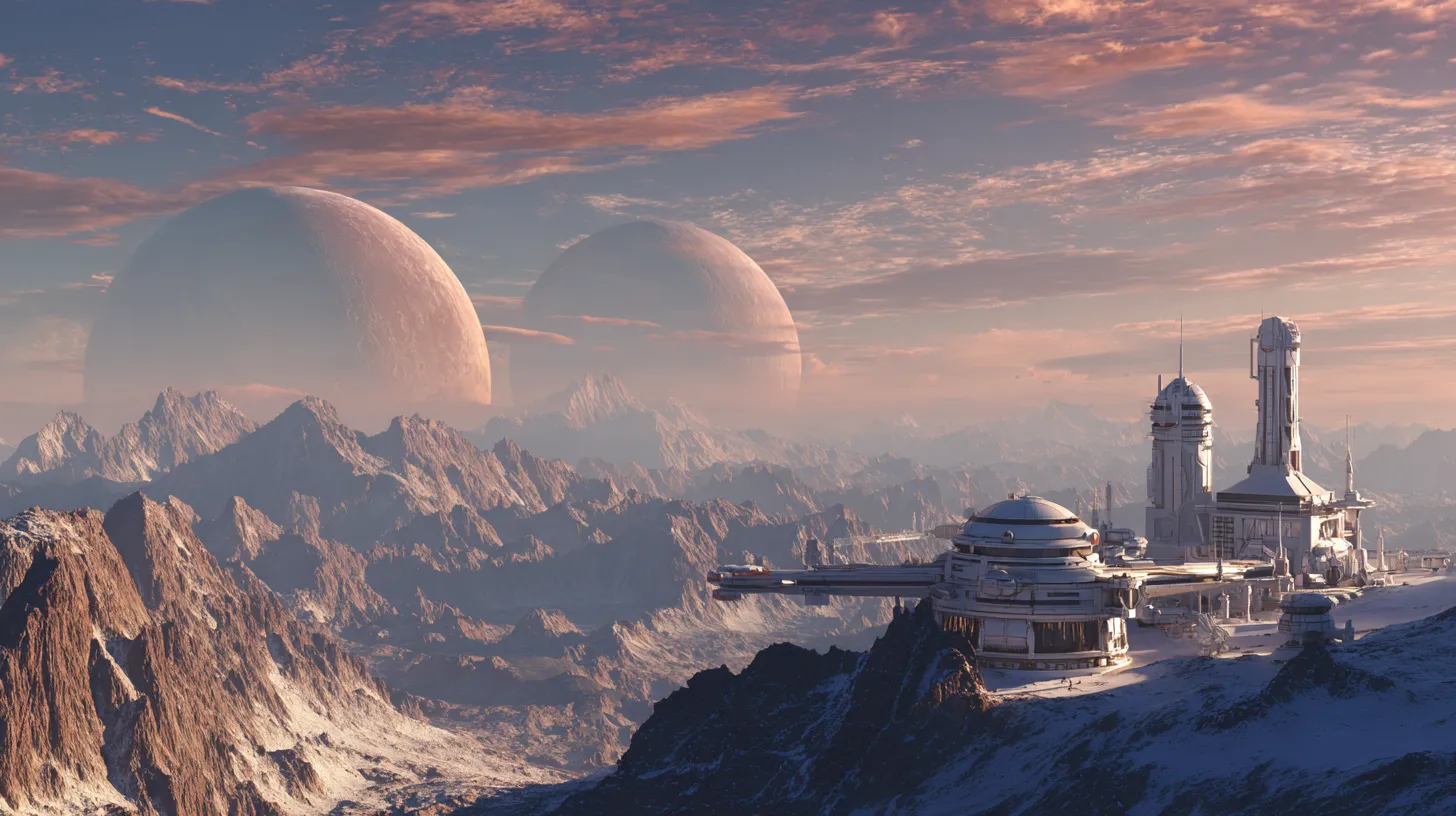
Far from the glittering towers of Trantor, at the very edge of the spiral arm, lies a world of solitude and hardship. This is Terminus, the rock upon which the new Galactic Empire was to be built.
A World Without Resources
Terminus was chosen by Hari Seldon not for its wealth, but for its isolation. It is a planet poor in mineral resources, almost entirely lacking in metals. This scarcity forced the Foundationers to become masters of miniaturization and efficiency.
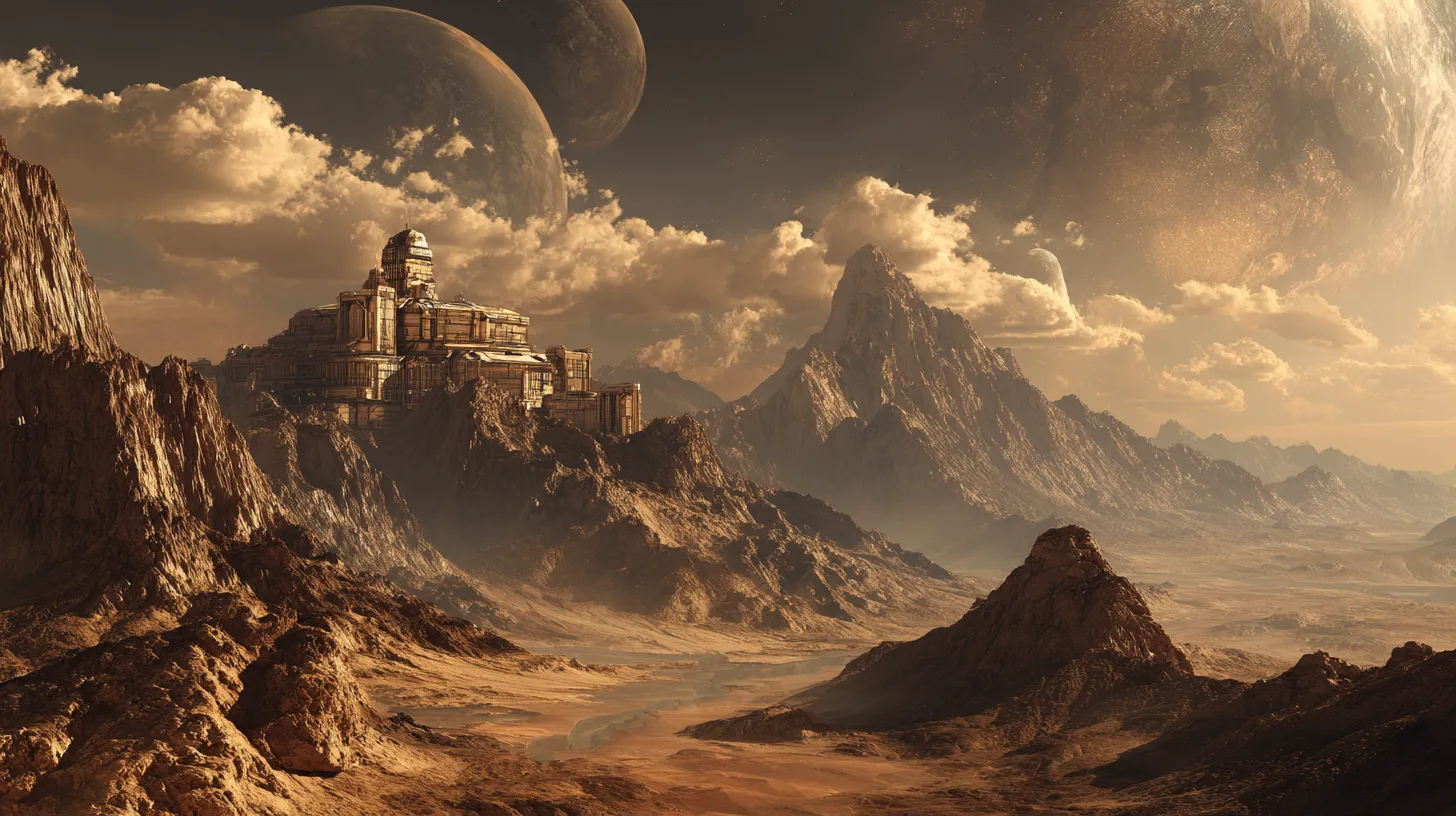
While the rest of the galaxy built massive, hulking machinery, Terminus learned to make nuclear devices small enough to carry. This technological superiority became their primary trade good and their greatest weapon when the surrounding "Four Kingdoms" reverted to barbarism and coal power.
The Encyclopedia Galactica
The original settlers of Terminus believed their mission was solely to compile the Encyclopedia Galactica, a compendium of all human knowledge to carry it through the coming dark ages.
However, this was a ruse. Seldon needed a colony of scientists and scholars at the edge of the galaxy, and a harmless-looking project that the Empire would allow. He also knew that the colony would soon be threatened by its neighbors, and that the crisis would force it to discover its real purpose. When the first "Seldon Crisis" arrived, the Encyclopedists were overthrown by the pragmatic Salvor Hardin, who recognized that "Violence is the last refuge of the incompetent."
Religion of Science
To survive amongst the barbaric kingdoms of the Periphery, Terminus adopted a unique strategy: they turned science into a religion.
The technicians sent to maintain the power plants of neighboring worlds were trained as "priests." Nuclear power became "holy light." The simple maintenance of a generator became a sacred ritual. This religion of science let Terminus control far more powerful kingdoms without firing a shot, because disobeying the Foundation meant risking the wrath of the Galactic Spirit (and a sudden power outage).
The Growth of Power
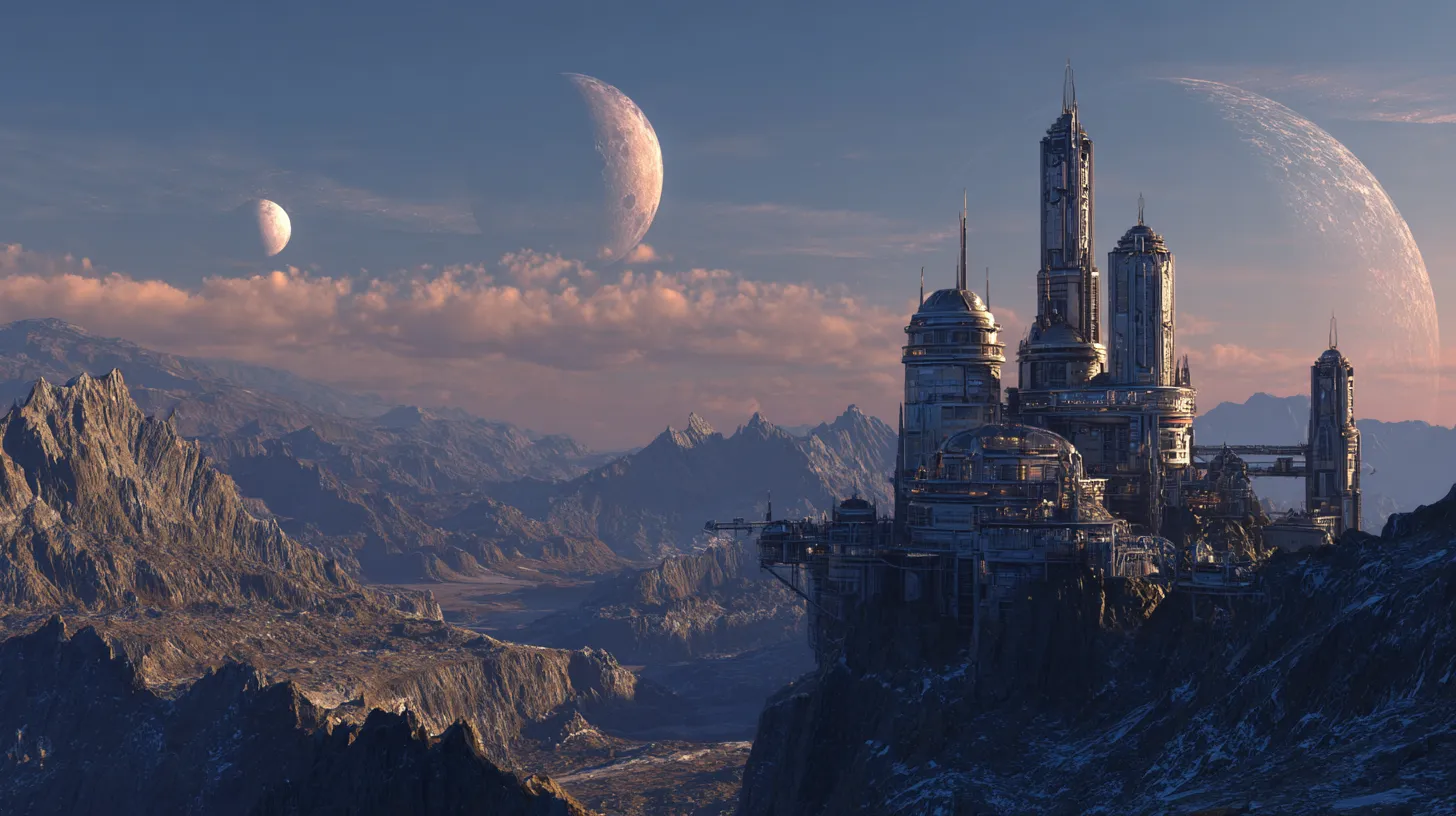
Over centuries, Terminus evolved from a library outpost into a Trade Federation, and finally into a military power. It weathered crisis after crisis, from the Imperial general Bel Riose to the mentalic mutant known as the Mule.
Though physically small and resource-poor, Terminus proved that true power lies not in massive fleets or endless armies, but in knowledge, diplomacy, and the adaptability of the human spirit. It stands as the beacon of light in the gathering darkness of the galaxy. Readers often compare this pattern, a vigorous society rising on the edge of a decaying empire, to the historian Arnold J. Toynbee's ideas about challenge and response.
The Mule's Conquest
Terminus's greatest defeat came not from external armies but from within. The Mule, a mutant warlord with the power to manipulate emotions, conquered the Foundation far faster than anyone thought possible. Unlike every previous Seldon Crisis, no amount of technological superiority or political cunning could defend against an enemy who could turn generals and politicians into willing servants with a touch of his mind.
The fall of Terminus to the Mule represents the single greatest disruption to the Seldon Plan in its entire history. It proved that psychohistory, for all its power, could not account for unique individuals of extraordinary ability. The Foundation would eventually recover, but only through the intervention of the Second Foundation operating from the shadows.
Terminus in the Apple TV+ Adaptation
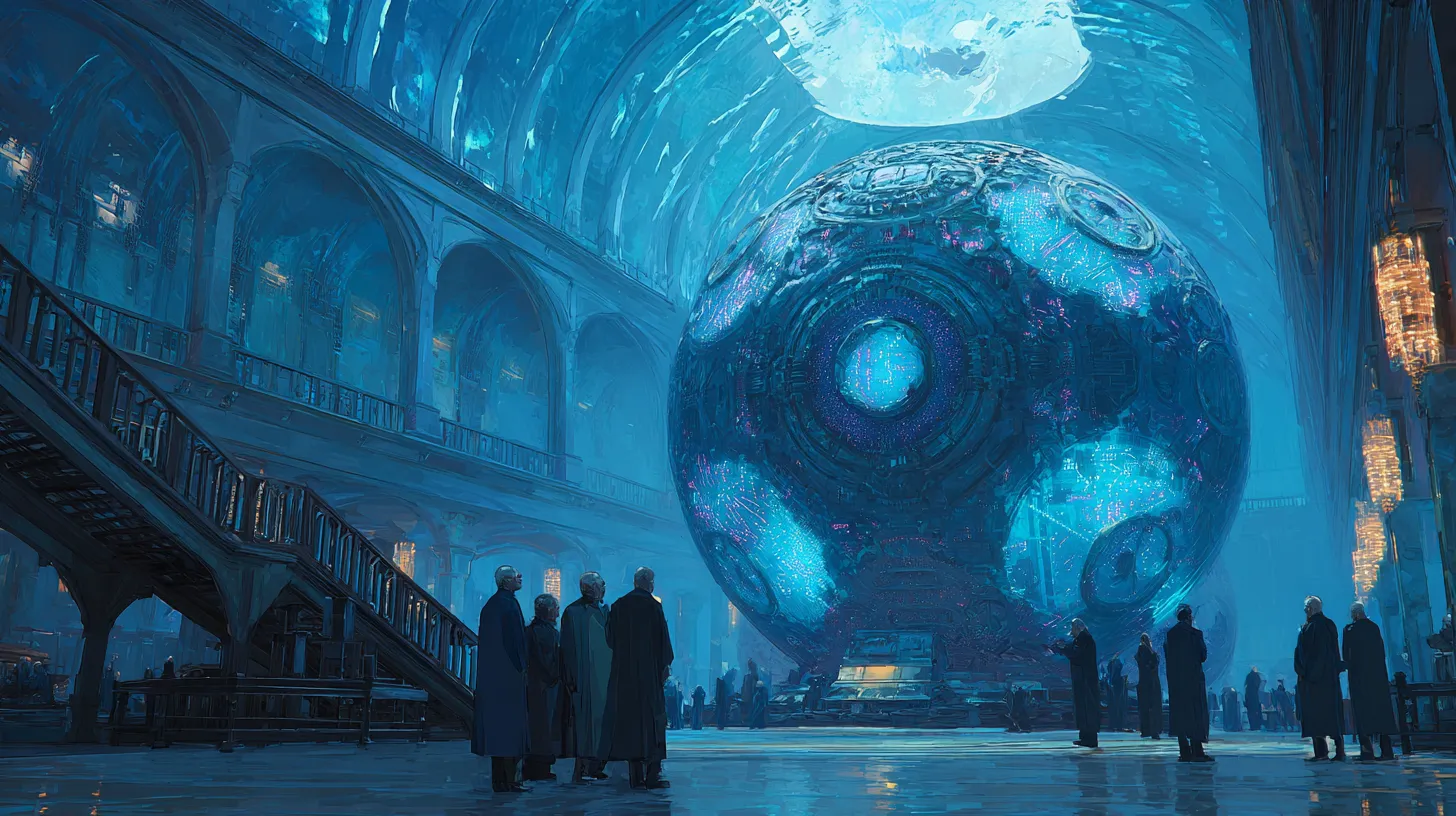
In Apple TV+'s Foundation series (2021–2025), Terminus is depicted as a stark, wind-swept world with a distinctly alien landscape. The show introduces the Vault, a mysterious floating monolith surrounded by a null field, as the central mystery of the Terminus storyline. This element is entirely original to the adaptation; in Asimov's novels, Seldon communicates through a simple holographic time capsule.
The show's visual design of Terminus emphasizes its isolation and harsh conditions, contrasting sharply with the gilded opulence of Trantor. Leah Harvey portrays Salvor Hardin as the colony's Warden, a significant departure from the books, where Hardin is a male politician and the colony's first mayor.
Real-World Parallels
Terminus's story resonates with numerous real-world historical parallels. The idea of a small, resource-poor community becoming a center of innovation echoes the history of Venice, which turned its lack of farmland into mastery of maritime trade, or Silicon Valley, where intellectual capital proved more valuable than natural resources.
The Foundation's strategy of turning science into a religion to control neighboring kingdoms loosely echoes how the Catholic Church preserved literacy and learning during Europe's early medieval period, wielding knowledge as a form of political power among illiterate kingdoms.
Common Misconceptions About Terminus
"Terminus was chosen for its resources." The opposite is true. Seldon picked the planet precisely because it had almost nothing: no metals, no strategic value, no reason for the Empire to look twice at it. Its poverty was the point: colonists with no raw materials had to master miniaturization, and a world with nothing worth seizing could grow unmolested.
"The Encyclopedia was the Foundation's real mission." The Encyclopedia Galactica was cover. When the Time Vault finally opens, fifty years after the landing, Seldon's recording admits as much: the encyclopedia was a pretext to gather a colony of scholars and their families at the edge of the galaxy and keep them busy while history closed in around them. The real mission was to become the seed of the Second Empire.
"The Foundation conquered its neighbors by force." It never had to. Terminus won its early crises through leverage, not fleets: first the religion of science, which made the Foundation's technicians indispensable to the Four Kingdoms, and later open trade under Hober Mallow, whose policy was to make neighboring worlds so dependent on Foundation goods that war against Terminus became economic suicide.
"Terminus was the only Foundation." Seldon established two. The Second Foundation of psychologists and mentalicians was said to be "at Star's End," at the other end of the galaxy, a clue that Second Foundation eventually reveals points to Trantor itself, the world where all stars end.
Where Terminus Appears in the Books and Show
Terminus is the primary setting of Foundation (1951), from the landing of the Encyclopedists through Hober Mallow's trade wars. In Foundation and Empire (1952) it falls to the Mule, the single greatest catastrophe in the Plan's history. In Second Foundation (1953), after the Mule's death, a Terminus free again becomes the base of a secret hunt for the Second Foundation. In the later novels, Foundation's Edge (1982) and Foundation and Earth (1986), Terminus has grown into the capital of a Foundation Federation that spans a large part of the galaxy: the rock at the edge of nowhere has become the center of everything.
On screen, the Apple TV+ series keeps Terminus at the heart of its ground-level storyline across three seasons: the colony's founding, the mystery of the Vault, Salvor Hardin's tenure as Warden, and the Foundation's eventual transformation from a fringe settlement into a power the Empire itself must reckon with. The show's windswept, half-alien landscape is its own invention, but it captures the isolation Asimov intended.
Frequently Asked Questions
Where is Terminus located in the Foundation universe?
Terminus is located at the extreme edge of the galaxy's spiral arm, as far from the imperial capital of Trantor as physically possible within the Empire's borders. Hari Seldon deliberately chose this remote location to isolate the Foundation from imperial politics and force its colonists to develop self-sufficiency. The planet is described as being poor in heavy metals and natural resources.
Why did Hari Seldon choose Terminus for the Foundation?
Seldon chose Terminus for strategic reasons that went far beyond compiling the Encyclopedia Galactica. Its isolation ensured the Foundation would be free from imperial interference during the critical early centuries. Its lack of resources forced the colonists to innovate, developing miniaturized nuclear technology that became their primary trade good and diplomatic leverage against neighboring kingdoms.
What is the Vault on Terminus in the TV show?
The Vault is a mysterious floating monolith on Terminus that appears in Apple TV+'s adaptation. It generates a "null field" that repels almost everyone who approaches, except Salvor Hardin. The Vault eventually opens to reveal a digital consciousness of Hari Seldon. This element is entirely original to the TV show; in Asimov's novels, Seldon communicates through pre-recorded holographic appearances in a Time Vault.
Does Terminus fall to the Mule?
Yes. In both the novels and the TV adaptation, the Mule conquers Terminus and the First Foundation. This is the most catastrophic event in the Seldon Plan's history, as psychohistory could not predict or account for a unique mutant individual. The Foundation eventually recovers, but only after the Second Foundation intervenes to neutralize the Mule's threat.