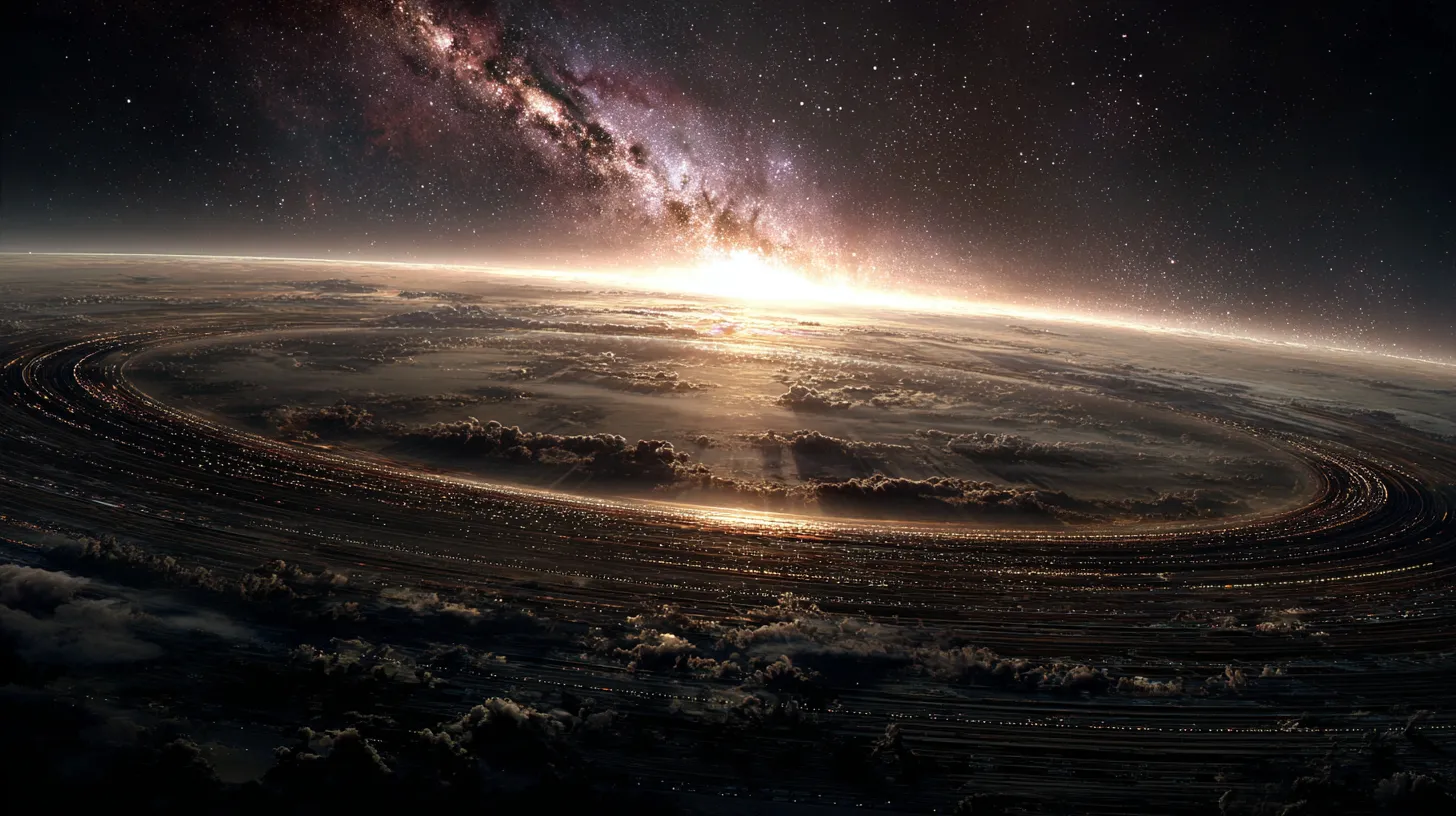
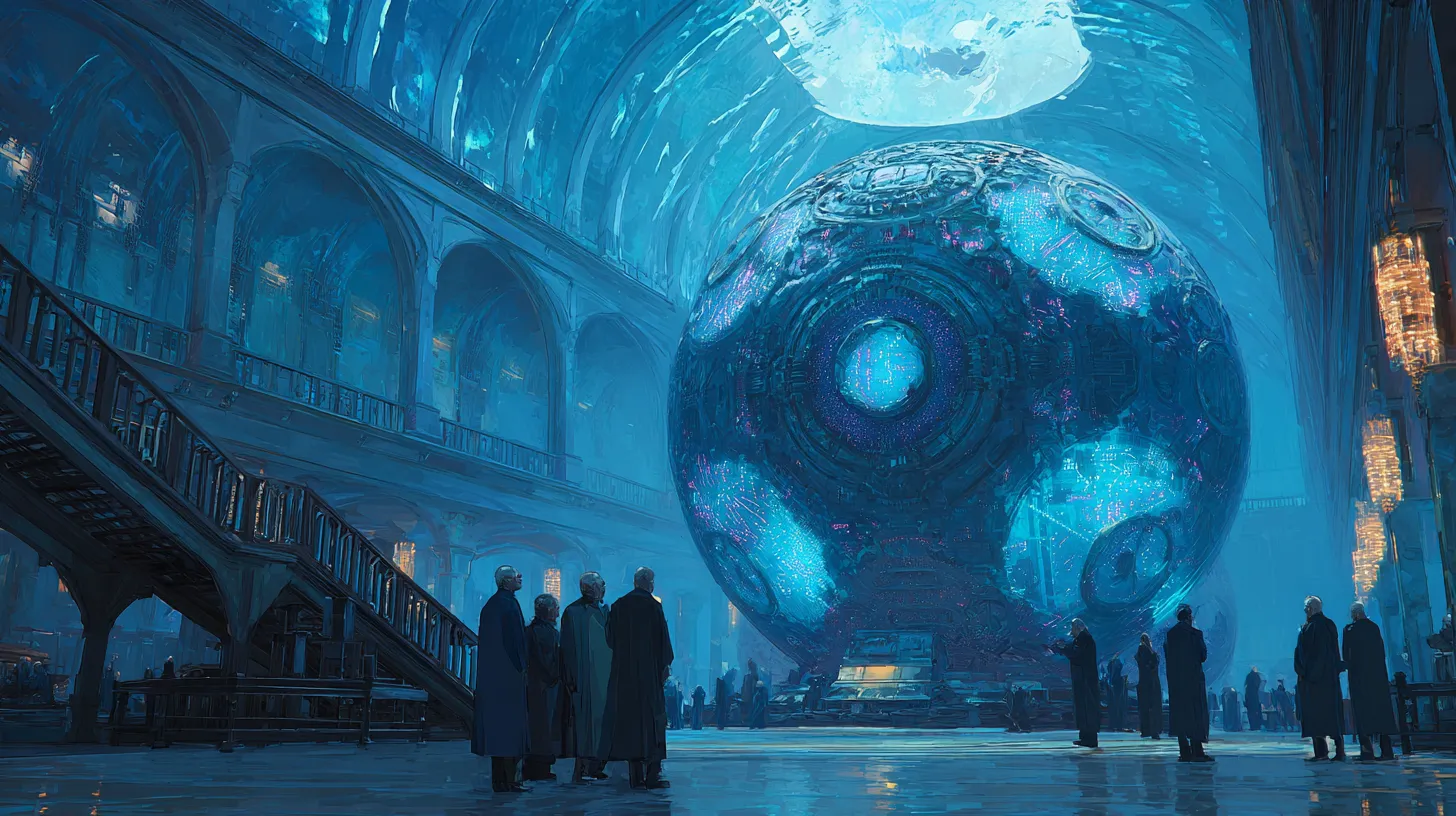
Published in the September 1941 issue of Astounding Science Fiction when Isaac Asimov was just twenty-one years old, "Nightfall" imagines a civilization living on a planet illuminated by six suns—where true darkness arrives only once every 2,049 years. In 1968, the Science Fiction Writers of America voted "Nightfall" the greatest science fiction short story published prior to the creation of the Nebula Awards.
Wait: how could simple darkness destroy an advanced scientific civilization? Asimov's insight is not that shadows hold monsters, but that seeing the real size of the universe for the first time shatters the human mind.
Origin Story: Emerson, John W. Campbell, and a 21-Year-Old Asimov
In early 1941, legendary Astounding editor John W. Campbell Jr. handed young Isaac Asimov a quotation from Ralph Waldo Emerson's essay Nature (1836):
"If the stars should appear one night in a thousand years, how would men believe and adore, and preserve for many generations the remembrance of the city of God!"
Campbell disagreed with Emerson's optimism. Instead of feeling reverent awe, Campbell argued, people who had never seen darkness or stars would go mad. He challenged Asimov to write the story proving why—laying the exact collaborative groundwork that only months later produced the opening stories of Foundation.
Plot Summary: Countdown on Lagash
"Nightfall" takes place inside the observatory at Saro University on the planet Lagash (renamed Kalgash when Asimov and Robert Silverberg expanded the novelette into a full-length 1990 novel).
Because Lagash orbits inside a complex six-star system, at least one sun is almost always above the horizon. People on Lagash have never experienced true night; enclosed tunnels and darkness itself trigger immediate claustrophobic panic after only a quarter-hour.
Inside the observatory, scientists and skeptics gather during the final hours before an unprecedented astronomical event:
- Aton 77, director of Saro University's observatory, and young astronomer Beenay 25 have worked out an impossible orbital coincidence—building indirectly on Newtonian/Universal Gravitation work that had puzzled Lagash's physicists for centuries precisely because all six suns complicated orbital measurements.
- Once every 2,049 years, five of the six suns sit below Lagash's horizon while the sixth, dim red dwarf Beta, is temporarily blocked by a previously unseen dark moon.
- Psychologist Sheerin 501 explains why darkness kills: prolonged dark triggers unbearable physiological panic, driving populations to light anything flammable—cities, timber, libraries—just to banish the void.
- Journalist Theremon 762, initially mocking the scientists' prophecy of doom, realizes they aren't playing a prank as an aggressive group of religious zealots—known as the Cultists (or Apostles of Flame)—storm the observatory to silence science before their prophecy unfolds.
Archaeologists had already found burned ruins of roughly nine prior civilizations stacked vertically beneath Lagash's soil—each separated by roughly two millennia. Everything points to a terrifying cycle.
Ending Explained: Why the Stars Trigger Madness (Spoilers Below)
When the total eclipse finally settles across Beta, the scientists inside the observatory watch horrified—yet initially steady—using their emergency torches and preparations to ride out the dark.
What neither Aton 77 nor Sheerin 501 anticipated was what hangs inside darkness once the suns vanish. Because Lagash lies inside a dense star cluster rather than an outer galactic arm, the eclipse doesn't plunge the world into empty black. Instead, more than thirty thousand blazing stars suddenly erupt overhead across an unimaginable abyss—so bright and overwhelming that the small, safe sky Lagash's people thought they owned disappears in an instant.
Driven out of their wits by the sudden infinite scale of the cosmos—and echoed across the planet by panicked citizens lighting torches and setting cities ablaze—everyone at the observatory breaks mentally. Theremon, Beenay, and Aton stare up into the freezing brilliance as "the long night had come again."
Why "Nightfall" Matters in Asimov's Career
- Bridge Straight to Foundation: The central idea of "Nightfall"—a civilization uncovering buried historical cycles and realizing it cannot stop an imminent collapse, yet fighting to preserve tiny sparks of recorded knowledge (the Hideout in the story)—directly anticipates Hari Seldon and the Encyclopedia Galactica in Foundation.
- Short Story vs. 1990 Novel Expansion: In 1990, an aging Asimov partnered with Robert Silverberg to expand the novelette into the novel Nightfall, adding full opening chapters before the eclipse and a third section exploring what survives after dawn returns. While the novel fleshes out Kalgash's geography and aftermath, most critics still consider the razor-sharp 1941 novelette the definitive version.
- Science Over Spectacle: Just like The Caves of Steel and psychohistory, "Nightfall" derives all of its horror from astronomy, psychology, and buried archaeological stratigraphy—not aliens or monsters.
Continue Exploring Isaac Asimov
- "The Last Question" Explained (1956) — Asimov's other most famous short story, racing all the way to the heat death of the universe
- The Best Isaac Asimov Books Ranked — complete beginner guide to Asimov's top novels and collections
- Foundation Book Guide — where Asimov took the theme of collapsing civilizations next
- The Science of Psychohistory — how Asimov turned historical cycles into fictional mathematics