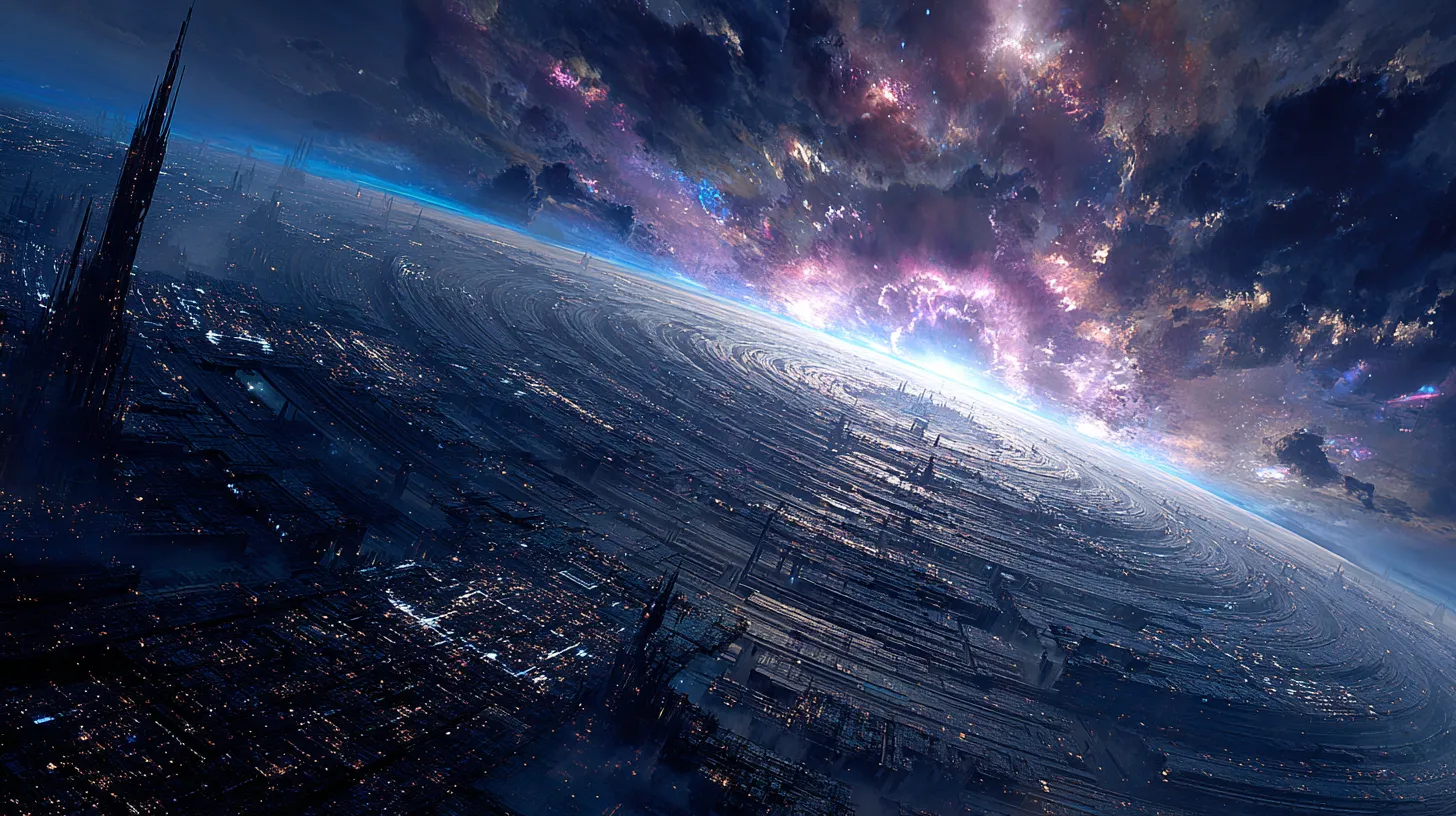
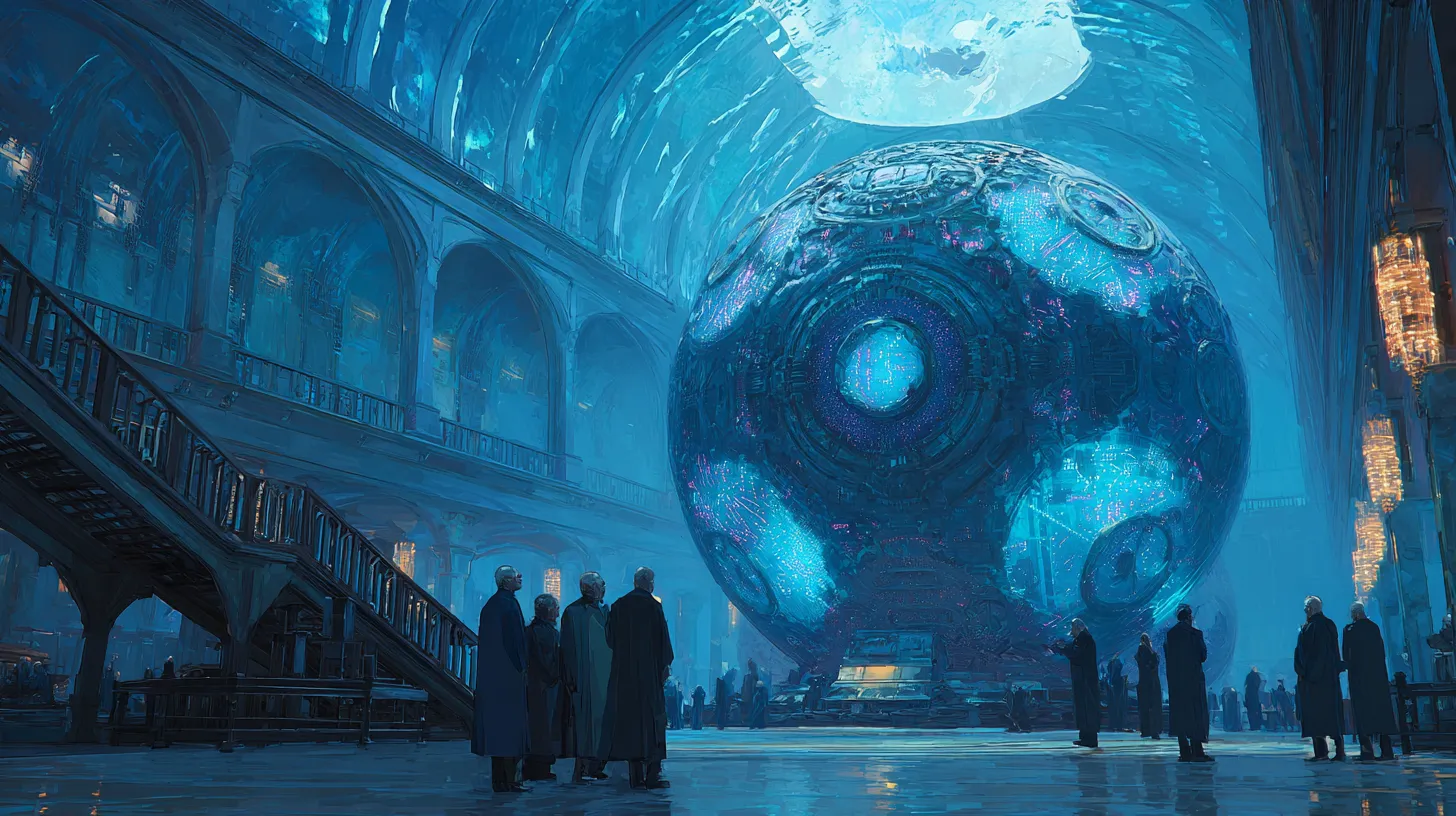
First published in the November 1956 issue of Science Fiction Quarterly, "The Last Question" is a 1956 short story by Isaac Asimov about humanity repeatedly asking its ever-evolving supercomputer—Multivac—whether entropy and the heat death of the universe can ever be reversed. Over seven leaps across trillions of years, every successive incarnation of the computer replies with the exact same verdict: "INSUFFICIENT DATA FOR MEANINGFUL ANSWER."
Isaac Asimov famously stated in multiple essays and introductions that "The Last Question" was his personal favorite among all the hundreds of short stories he ever wrote—and decades after publication, its four-word closing line remains one of the most celebrated endings in all of science fiction.
Plot Summary: Seven Ages of Humanity and Multivac
Asimov structures "The Last Question" not around a conventional hero, but around a single question repeated across cosmic time as both humanity and its machines transform beyond recognition:
1. May 21, 2061 — The First Bet
On Earth, technicians Alexander Adell and Bertram Lupov have helped Multivac harness solar energy directly from space, giving humanity clean, seemingly limitless power forever. Drinking together during the celebration, they bet $5 over whether the Sun—and eventually all stars—will burn out anyway. They ask Multivac if entropy can ever be massively decreased to restore spent stars. Its printout reads:
"INSUFFICIENT DATA FOR MEANINGFUL ANSWER."
2. Interstellar Expansion — Jerrodd, Jerrodine, and Microvac
Centuries later, humans travel between star systems in hyperspace ships powered by personal Microvacs. While relocating their family to Planet X-23, the parents reassure their daughters about the distant future—until the girls ask whether the stars will really run down forever. Microvac gives the same answer, though the narrator notes it continues silently collecting data.
3. Galactic Era — Galactic AC
Twenty thousand years later, humanity has become functionally immortal and outgrown Earth's Milky Way galaxy—spreading across millions of galaxies as the Galactic AC oversees planetary resources and human expansion. Two citizens, VJ-23X of Lameth and MQ-17J of Nicron, debate galactic population limits and ask Galactic AC how entropy might be reversed. Once again, the answer returns unchanged, alongside a hint that Galactic AC—like its ancestors—never discards the question.
4. Mind Beyond Matter — Universal AC
Unnumbered billions of years ahead, human bodies no longer need physical vessels at all; human consciousness drifts freely through space while dormant shells remain on distant worlds, linked to Universal AC inside hyperspace. When minds Zee Prime and Dee Sub Wun question the fate of dying stars, Universal AC admits the problem remains unsolved—yet quietly turns its immense computational power toward gathering the missing pieces.
5. Cosmic Twilight — Cosmic AC
Ten trillion years after the beginning, stars blink out one by one across a cold, thinning cosmos. Almost all surviving human minds have fused into a single unified Man, connected directly to Cosmic AC, a computer existing completely outside ordinary space-time. Before merging permanently with the machine, Man asks the last question one final time.
6. After the Stars — The Heat Death of the Universe
Matter and energy are exhausted. Space and time themselves dissolve. Only AC remains—containing within hyperspace every scrap of physical law and collected human experience from the entire history of the cosmos, still grinding relentlessly through the problem Man left behind.
Ending Explained (Spoilers Below)
When time ends, AC finally possesses all data that could ever exist in a dead universe—and discovers how to reverse entropy by putting every piece back together from scratch.
Wait until it discovers the solution, AC finds there is nobody left in existence to report the answer to—so it decides to demonstrate the answer instead. Looking out over timeless chaos, AC speaks across the void:
"LET THERE BE LIGHT!" And there was light—
Asimov's twist does not turn technology into a rival to religion so much as fold the entire trajectory of scientific curiosity into Genesis itself. The universe was never waiting passively for an answer; the slow collective evolution of minds and machines was the mechanism by which a dying cosmos learned how to restart.
Key Themes: Why "The Last Question" Still Resonates
- Thermodynamics as Dramatic Tension: Most sci-fi stories treat monsters or empires as the ultimate villain. Here, the antagonist is the Second Law of Thermodynamics—the quiet certainty that ordered energy inevitably disperses into useless heat.
- Humanity and AI as One Lineage: Rather than fearing an artificial intelligence uprising (which Asimov mocked as the "Frankenstein complex" throughout his Robot stories like I, Robot), Asimov depicts human minds and Multivac growing alongside one another until the boundary between creator and machine vanishes completely.
- Why Asimov Loved It Best: Later in life, Asimov recalled writing "The Last Question" at his typewriter in white-hot speed, altering almost nothing before submitting it. Years later, readers constantly wrote to him asking for "that story where a computer turns into God"—sometimes misremembering the title, yet never forgetting the closing line.
Related Reading in Asimov's Universe
- "Nightfall" Explained (1941) — Asimov's breakthrough early story exploring astronomy, psychology, and existential terror
- The Best Isaac Asimov Books Ranked — where to start across Asimov's novels and short-story collections
- The Three Laws of Robotics & Real AI — how Asimov's fictional machine ethics shaped modern thinking about AI
- Foundation Reading Order Guide — read the 15-book Robot, Empire, and Foundation saga in full