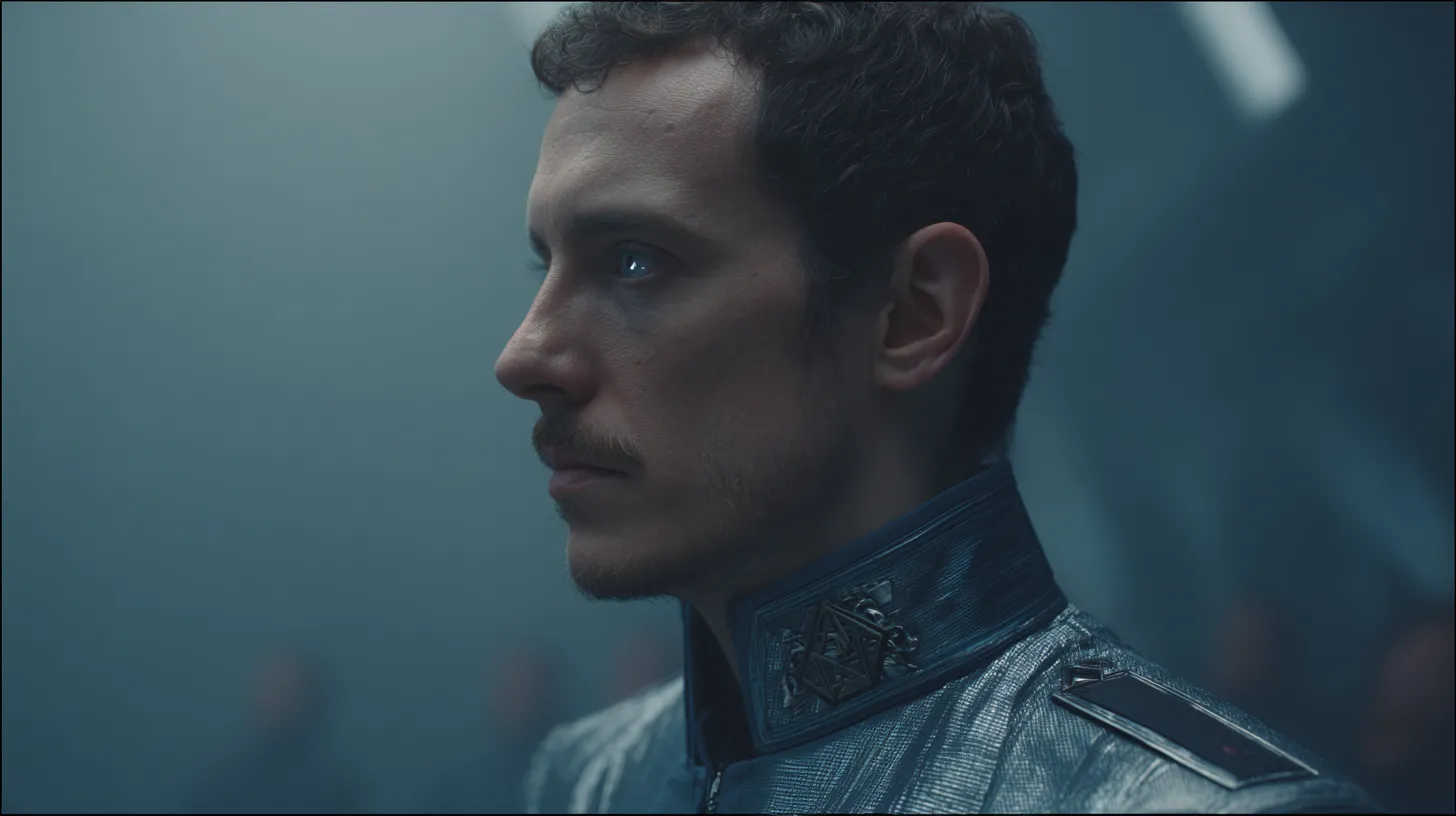
Golan Trevize
A councilman of the Foundation with the unique ability to always make the right decision.
Quick Summary
Golan Trevize is the Foundation councilman whose uncanny knack for making the right call leads Gaia to choose him to decide humanity's future. His quest to find Earth in 'Foundation's Edge' and 'Foundation and Earth' ultimately reveals the deepest secrets of Asimov's universe.
Appears In
- Foundation's Edge
- Foundation and Earth
Key Traits
- Councilman
- Decision-Maker
- Intuitive
- Leader
Importance
Councilman in the Foundation saga
Who He Is
Golan Trevize is the protagonist of Foundation's Edge (1982) and Foundation and Earth (1986), set about five centuries after the Foundation began. He is a young councilman of Terminus: impatient, argumentative, fond of his own intuition, and very often right. He has an odd talent that other characters eventually notice. He does not always know why he believes something, but when he is certain, he tends to be correct.
His Story in Foundation's Edge
Trevize makes a dangerous speech. The Seldon Plan, he says, is working too perfectly, which suggests that the Second Foundation still exists and is still steering things. Mayor Harla Branno has him arrested and sent into space, officially in disgrace. Unofficially, she is using him as bait to draw the Second Foundation out.
He travels with the historian Janov Pelorat in a new gravitic ship he names the Far Star, after Hober Mallow's ship. Pelorat wants to find Earth; Trevize wants to find the Second Foundation. Their search leads them to Sayshell and then to Gaia, a planet whose every living thing shares a single mind.
At the climax, the First Foundation, the Second Foundation, and Gaia confront one another, and Trevize is asked to decide the future. He can choose the First Foundation's path of physical power, the Second Foundation's path of mental guidance, or Galaxia, Gaia's vision of a whole galaxy joined into one living consciousness. He chooses Galaxia.
His Story in Foundation and Earth
Trevize cannot stop wondering why he made that choice. Believing the answer lies with humanity's forgotten origin, he sets out to find Earth with Pelorat and Bliss, a young woman who is part of Gaia. The search takes them to Comporellon, the abandoned Spacer worlds of Aurora, Solaria, and Melpomenia, and the ocean planet Alpha, and finally to Earth's Moon, where he learns who has been guiding human history and why his decision mattered.
What He Represents
Trevize is the series' great skeptic. He distrusts the Seldon Plan, the Second Foundation, and Gaia alike, and he argues with everyone, especially Bliss, about whether a collective mind can leave room for individual freedom. That he is the one asked to choose is deliberate. Asimov gives the decision to the person least willing to accept anyone's answer on faith.
He is also a very different hero from the trilogy's problem-solvers. Hardin and Mallow win by reading forces clearly. Trevize wins by trusting an instinct he cannot explain, and then spends a whole novel making sure the instinct was right.
In the Apple TV+ Series
Trevize has not appeared in the Apple TV+ series as of Season 3.
Related Characters & Key Relationships
Continue from Golan Trevize into the allies, rivals, and successors who shape the same arc.
Continue Exploring
More Paths From Golan Trevize
Move from the character profile into the concepts and articles that explain their role in the wider Foundation universe.
Related Concepts
Location
Aurora
Aurora is the oldest and most powerful of the fifty Spacer worlds in Isaac Asimov's universe. With a small population of just 200 million humans served by billions of robots, Aurora represents the pinnacle—and the danger—of a civilization that chose comfort and isolation over growth.
ContinueLocation
Gaia
Gaia is a planet where every organism, rock, ocean, and atom shares a single collective consciousness. It represents Asimov's ultimate answer to the question of humanity's future — not individual achievement, but cosmic unity. Gaia is the prototype for Galaxia, the potential merging of all life in the galaxy into one superorganism.
ContinueLocation
Solaria
Solaria is the most extreme of the fifty Spacer worlds—a planet where each human lives alone on vast estates, communicating only through holographic 'viewing,' and where physical contact between humans is virtually taboo. It represents Asimov's darkest vision of where technology-dependent isolation leads.
ContinueEvent
Seldon Crisis
A Seldon Crisis is a pivotal historical moment predicted by psychohistory where the Foundation faces an existential threat with only one viable solution. These crises serve as checkpoints in the Seldon Plan, ensuring civilization stays on the path toward a Second Galactic Empire.
ContinueRelated Reading
TV Series
Foundation Season 3 Ending Explained: The Mule, Brother Darkness, and the Robot on the Moon
Who the Mule really is, why Brother Dusk became Brother Darkness, where the Second Foundation is hiding, and what the robot signal means. Every thread of the Season 3 finale, and how each one compares with Asimov's books.
ContinueBooks
How Many Foundation Books Are There? The Complete List
Isaac Asimov wrote seven Foundation novels. Three more were written by other authors, and eight further books tie into the same universe. Here is every title, its year, what kind of book it is, and where it sits in the story.
ContinueConcepts
Psychohistory Is About Control, Not Prophecy: The Foundation Warning Everyone Misses
Silicon Valley reads Foundation as a dream of predicting society. Read it again: psychohistory only works through secrecy, manipulation, and a hidden elite steering billions. Asimov wasn't describing a science we should want. He was describing the one we built.
Continue