In Isaac Asimov's Foundation universe, most technology is described vaguely or not at all. Hyperspace travel, nuclear power, gravitic drives — Asimov gives you the result without the mechanism. The Foundation series is, at its core, a story about ideas and history, not hardware.
There is one exception: the Prime Radiant.
The Prime Radiant gets more specific, more careful attention than anything else in the novels. Asimov describes it across multiple books, shows us how it works, and uses it to dramatize the most important question in his universe: can the future be predicted, and can that prediction be changed?
What Is the Prime Radiant?
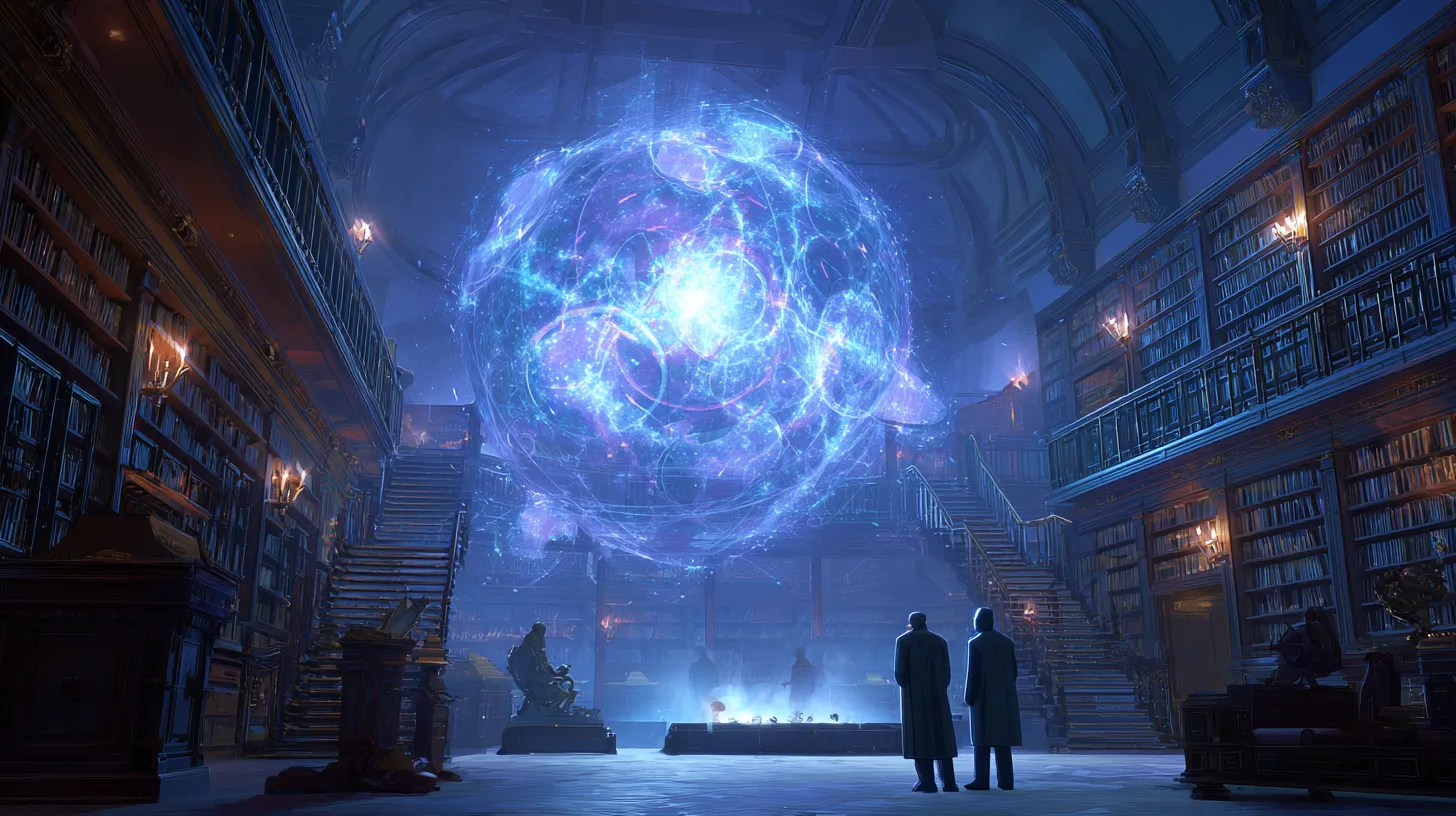
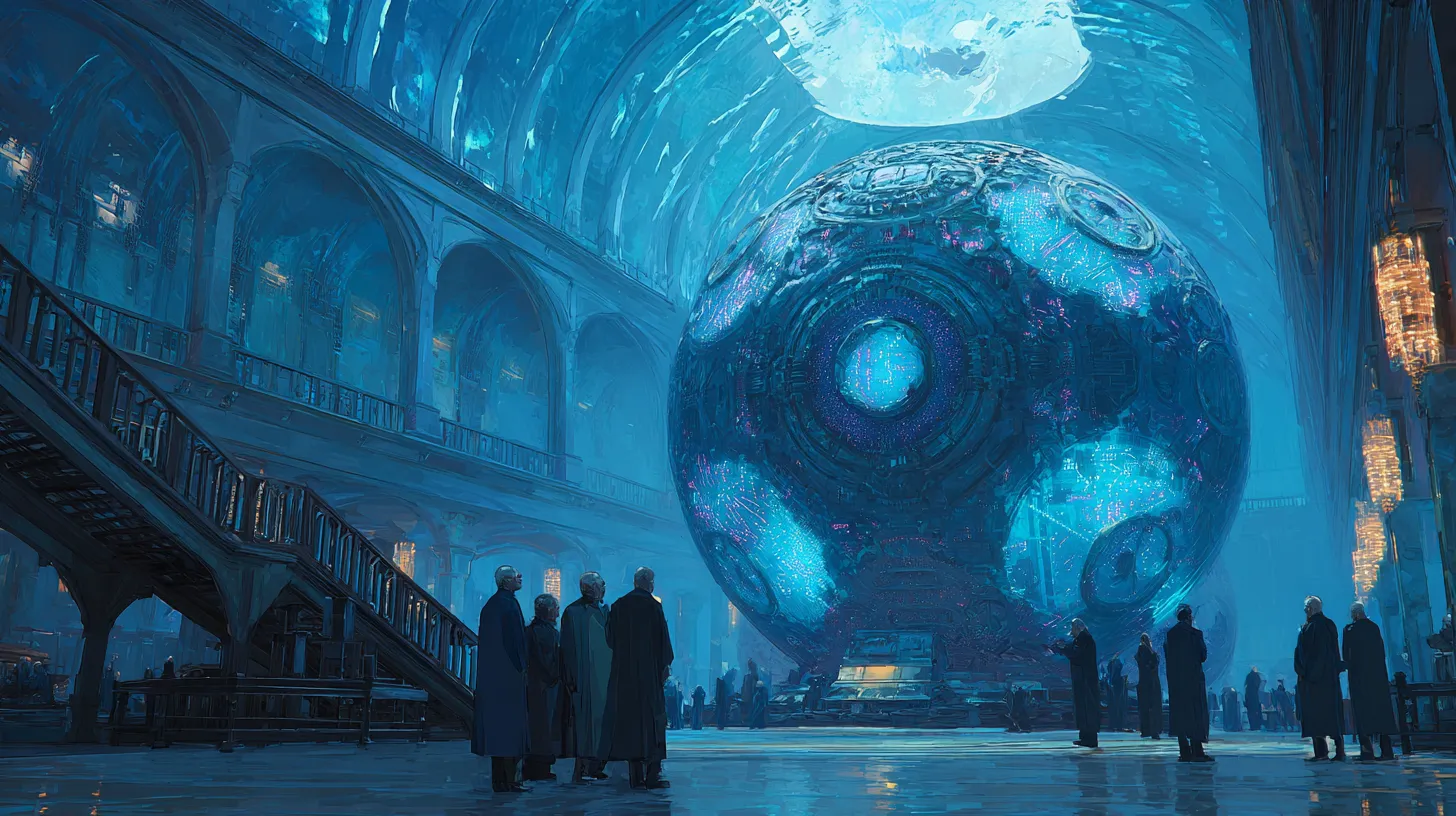
The Prime Radiant is a small, handheld device — about the size of a billiard ball in some descriptions — that projects a three-dimensional display of the complete mathematical equations underlying the Seldon Plan. It is, in essence, a computational storage device that holds Hari Seldon's entire predictive model for galactic history.
But it's more than just a calculator. The Prime Radiant is the working document of psychohistory — a living model that is continuously updated, revised, and corrected as history unfolds. It stores not just the original Seldon equations but all subsequent modifications made by the Second Foundation's First Speakers across a thousand years.
"The Prime Radiant could be adjusted to display any portion of the Plan... and the equations in their complexity — or the logical structure of their complexity — surrounded the First Speaker. He stood in the midst of the equations." — Isaac Asimov, Second Foundation (1953)
How Does It Work?
Asimov describes the Prime Radiant as producing its display not by projection but by direct manipulation of light — the equations appear to float in space, visible from any angle, without any visible projector or screen. The operator can gesture to zoom in on specific portions, branch into probability trees, or fast-forward the predicted timeline to see the long-term consequences of present events.
The display works in a specialized notation that is not conventional mathematics — it's the mathematical language of psychohistory itself, which Seldon developed from scratch. Reading the Prime Radiant requires training. The First Speakers of the Second Foundation spend years mastering this notation before they can interpret the Plan in real time.
Key features of the Prime Radiant's display:
- The Plan itself: The core probability curve of galactic history, showing the 1,000-year path from the Fall of the Empire to the rise of the Second Empire
- Branch points: Moments where the curve diverges, showing alternative futures if key conditions aren't met
- Deviation markers: Color-coded indicators showing where history has departed from prediction and by how much
- Correction nodes: Points where the Second Foundation has intervened, and the mathematical adjustments made to compensate
The Prime Radiant and the Mule
The most dramatic use of the Prime Radiant in the novels occurs during the Mule's reign. When the Mule conquers the Foundation and disrupts the Seldon Plan, the First Speaker can observe this in the Prime Radiant in real time — the deviation from the predicted curve is visible as a spreading anomaly in the equations.
This is one of Asimov's most elegant narrative devices: the Plan isn't just a vague prophecy. It's a mathematical structure that can be monitored, diagnosed, and repaired. The Second Foundation doesn't panic when the Mule appears; they see him as a quantified problem requiring a quantified solution.
The Mule is, in Prime Radiant terms, a singularity — an event so far outside the model's parameters that it causes cascading deviations across the entire predicted timeline. The Second Foundation's task is to contain the damage and find a way to restore the trajectory without directly confronting a being who can manipulate emotions at will.
The Prime Radiant in Foundation's Edge
In Foundation's Edge (1982), Asimov reveals that the Prime Radiant has been continuously refined over 500 years. By the time of Golan Trevize and Stor Gendibal, the equations have been corrected, revised, and extended by dozens of First Speakers. It's no longer purely Seldon's work — it's a living document maintained by a tradition.
This creates a fascinating philosophical problem: how faithful is the current Plan to Seldon's original intentions? If you modify a plan enough times to account for unexpected events, at what point does it cease to be the original plan? The First Speakers debate this question, and it's genuinely unresolved in the text.
The Plan remains Seldon's in origin, but the First Speakers continually interpret and adjust its mathematics in practice.
The Foundation's Edge revelation also complicates our understanding of the Plan's reliability. If the Second Foundation has been making corrections for centuries, we can't know how much of what appears to be "Seldon's prediction coming true" is actually the Second Foundation steering events toward the predicted outcome. Seldon's plan might be self-fulfilling — not because the mathematics is perfect, but because an organization has been implementing it for a thousand years.
The Prime Radiant in the Apple TV+ Series
The Apple TV+ adaptation gives the Prime Radiant a striking visual interpretation: it appears as a spherical light display that can be worn as jewelry or placed on a surface, with equations spiraling outward in glowing notation. The show uses it primarily in Hari Seldon scenes, both the living Seldon and the digital-consciousness version preserved in the Vault.
The TV version emphasizes something the books only imply: the Prime Radiant is also a communication device between Seldon's recorded consciousness and the Foundation. When the Vault opens during a Seldon Crisis, it's because the Prime Radiant's equations have calculated that intervention is needed — Seldon speaks because the math told him to.
This interpretation adds a slightly mystical quality to what Asimov conceived as purely mechanical, but it serves the show's thematic interest in the border between prophecy and mathematics.
Why the Prime Radiant Matters
The Prime Radiant is important not just as a plot device but as a symbol. It represents the central claim of the Foundation series: that the future is not just predictable in principle but manageable in practice. Not by divine intervention, not by military force, but by careful mathematical maintenance.
It also represents the series' central anxiety: what if the mathematics is wrong? What if an event occurs that the model can't account for? The Mule is the answer to this anxiety — proof that even the most carefully maintained predictive system has an edge beyond which it cannot see.
The Prime Radiant is Asimov asking: what would it mean to actually see the future? And what would it cost to keep that future on track?
For readers who want to explore this further, the Prime Radiant's mechanics are discussed in most detail in Second Foundation (1953) and Foundation's Edge (1982). Both are worth reading back-to-back — the 30 years between them show how Asimov's own thinking about his creation evolved.