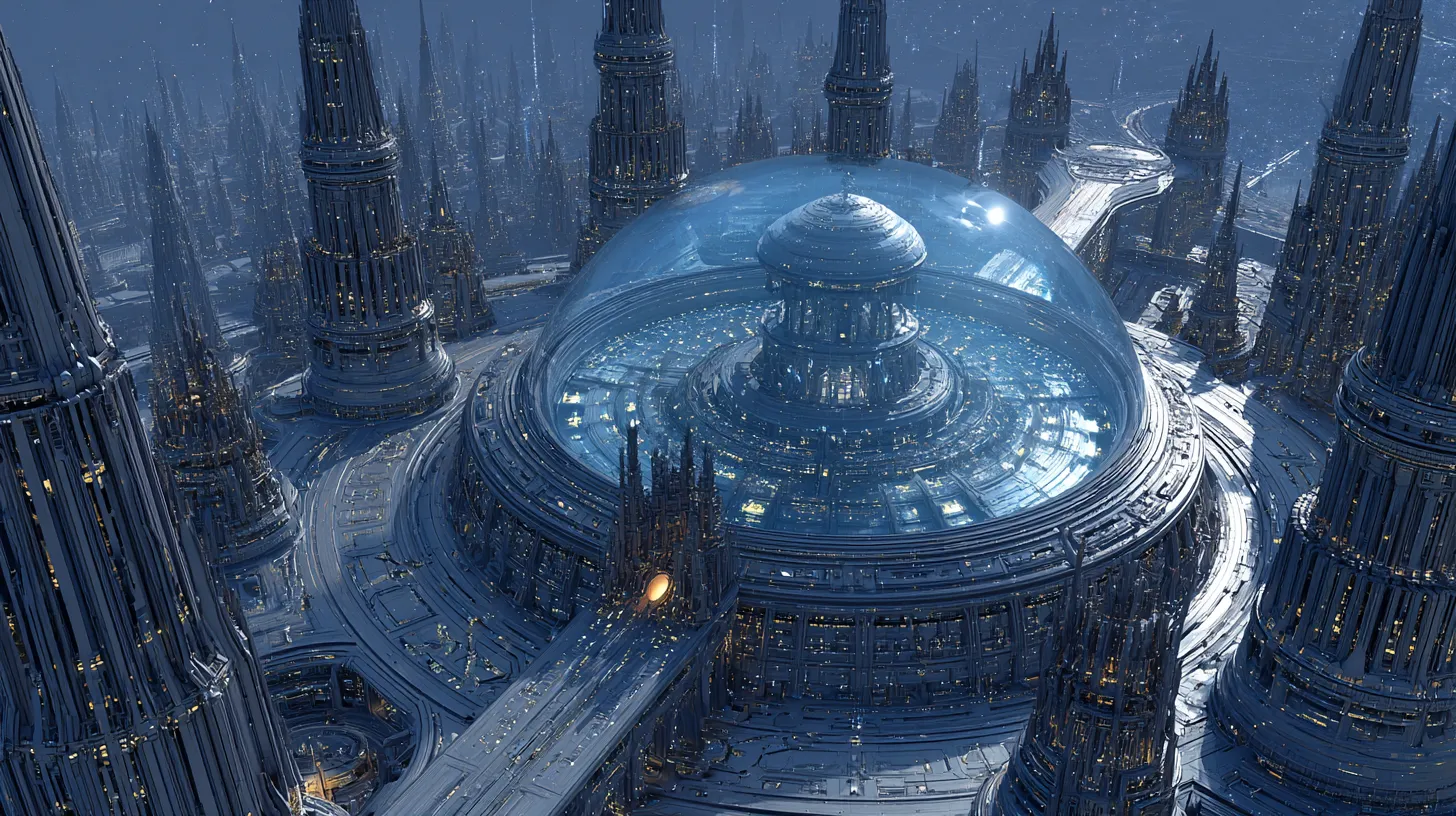
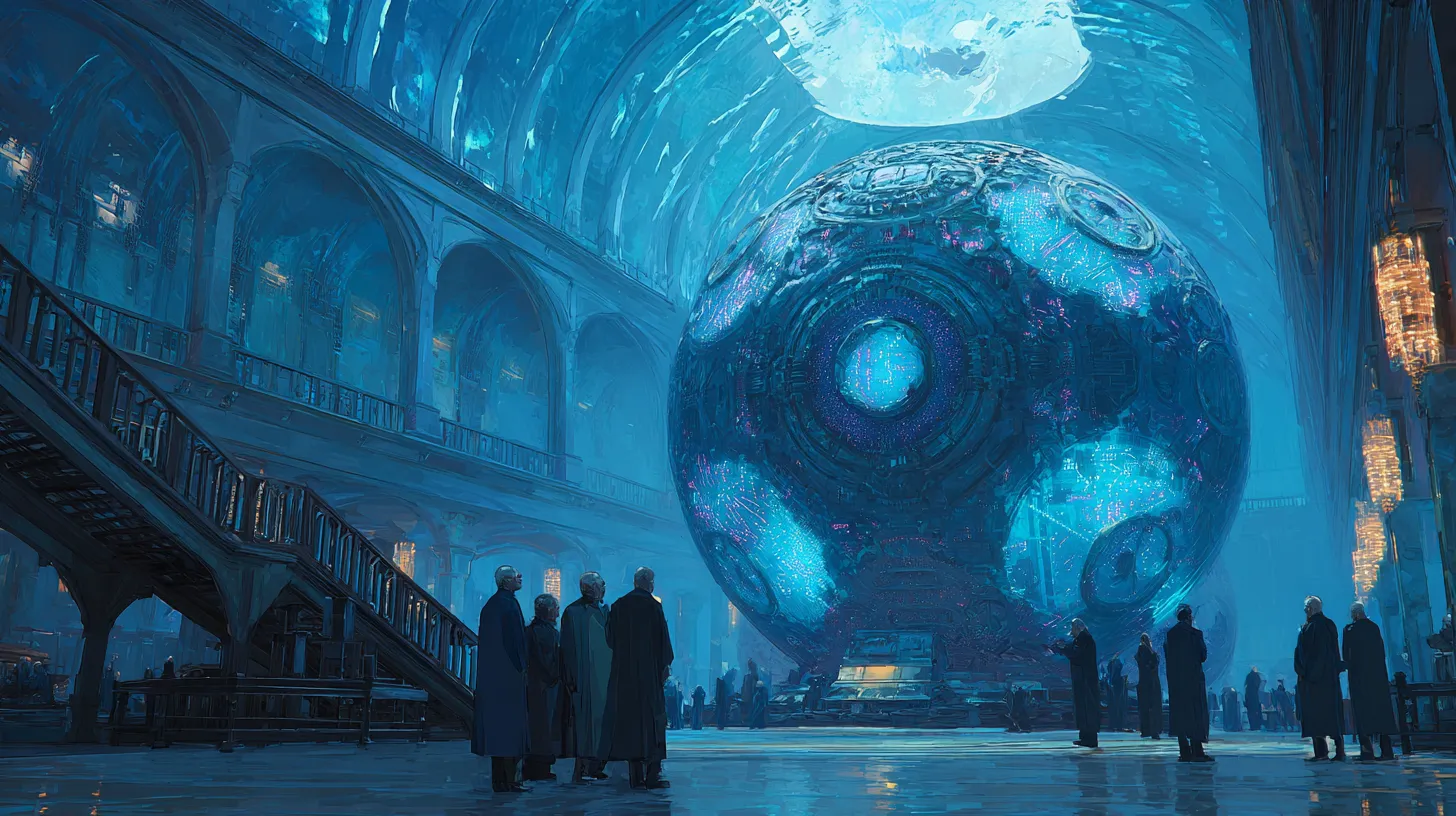
Hober Mallow appears in the third and fourth sections of Foundation (1951), covering what Asimov calls the Third and Fourth Seldon Crises. He is a Trader — a commercial representative of the Foundation who travels to hostile territory to establish trade relationships — and eventually the first Trader to achieve political power on Terminus.
He is also, in my view, the most underappreciated character in the Foundation series. Hardin gets the famous quotes. The Mule gets the mystique. Mallow gets less attention than either, partly because his work looks simple: he sells things, builds trade relationships, and wins a trial. But what he actually accomplishes — and the intellectual step he makes beyond Hardin — is worth examining carefully.
Background: What Mallow Inherits
By the time Mallow is active, approximately 80 years after the Foundation's establishment, the Foundation has become a significant regional power through the strategy Hardin built: nuclear technology, packaged as religious mysteries, administered by Foundation-trained priests.
This worked brilliantly for decades. The Foundation's technical monopoly is real; the kingdoms surrounding Terminus genuinely need Foundation technicians to keep their nuclear reactors running. Converting this dependency into a religious framework gave it cultural staying power — you don't attack the source of divine authority.
But Hardin's strategy has a ceiling. It works on kingdoms that are backward enough to experience nuclear technology as miraculous. It doesn't work on the Republic of Korell, which has its own industrial base and doesn't need Foundation priests. And it works poorly in the long run, because the Foundation is teaching its own priests exactly enough technology to make them useful — and someday, too much.
Mallow's mission is to find a better approach.
The Third Seldon Crisis: Korell
The Third Seldon Crisis begins when the Foundation's ambassadors are murdered in a foreign jurisdiction and the Foundation's trade relationships are threatened by hostile power from a direction nobody expected. Mallow is sent on a commercial mission to the Republic of Korell to assess the situation.
What he finds changes his thinking fundamentally.
Korell is not backward. It has its own military-industrial capacity. It doesn't want Foundation priests; it has its own culture and its own technical knowledge. If the Foundation tries to use the religious angle, Korell will simply refuse, and the Foundation will have lost any leverage it might have developed.
Mallow's solution is to abandon the religious approach entirely. Instead of offering technical knowledge wrapped in theological mystery, he offers commercial goods — consumer products, manufacturing equipment, appliances — things that individual Korellian citizens genuinely want. He doesn't ask for religious deference. He asks for trade agreements.
This seems like a downgrade. Trading junk for goodwill instead of establishing theological dominance. But Mallow has understood something Hardin didn't fully develop: commercial dependency is more durable than religious dependency, because it penetrates deeper into a society.
Religion reaches governments and aristocracies. Commerce reaches everyone.
The Trap
The Fourth Seldon Crisis — the attempt by the Republic of Korell, now equipped with military technology from the old Empire, to actually destroy the Foundation — is resolved through the trap Mallow spent years building.
The Foundation's consumer goods are everywhere in Korell by the time war breaks out. Foundation-built kitchen appliances, lighting systems, heating equipment. And these products are, deliberately, incompatible with any other power source. They require Foundation-provided power units. When Korell attempts to maintain its war effort while cutting off trade with the Foundation, the population simply stops being able to heat their homes, cook their food, run their businesses.
Korell's war against the Foundation is lost not on the battlefield but in the domestic spaces of ordinary Korellian citizens, who cannot fight a war they are simultaneously freezing through.
Mallow's power does not come from a royal title or a formal place in government. It comes from commercial dependency that no king can simply purchase or command. Asimov lets the reader understand that strategy gradually through Mallow's actions.
What Mallow Added to Hardin's Framework
Hardin's contribution was the insight that the Foundation's leverage came from what others needed, not from what the Foundation had.
Mallow's contribution was the insight that the most durable form of need is the kind that has already been integrated into daily life before you know it's need.
Hardin's religious strategy required active maintenance. Someone had to keep sending priests, keep teaching just enough and not too much, keep the kingdoms from figuring out what they were actually dependent on. This is manageable for a few decades, but it has failure modes: a king who decides to end the priesthood, a planet that reverse-engineers enough to be independent, a territory that simply doesn't have nuclear power in the first place.
Mallow's commercial strategy requires only that people buy things they find useful. Once the buying happens, the dependency is baked in. You don't need to maintain a religious hierarchy. You just need to keep manufacturing consumer goods that require your power source.
This is a more scalable model. It's also, Asimov implies, a more honest one — or at least a less deceptive one. The Foundation is selling things people want. The manipulation is in the product design (Foundation-only power sources), not in a false theological framework.
Mallow in the Larger Foundation History
Mallow appears only in Foundation — he doesn't recur in later novels as a character, only as a historical reference. His role in the book's structure is to advance the Foundation from religious hegemony to commercial hegemony, preparing it for the era of the Merchant Princes.
The Merchant Princes who follow him — described in Foundation and Empire — carry his model forward. They are traders, not priests; commercial operators, not religious authorities. The Foundation's expansion through trade is one of Asimov's most interesting ideas about how civilizations persist: not through military power, not through ideology, but through the slow, persistent accumulation of useful dependencies.
Is Mallow in the TV Show?
Yes — and the show reinvents him considerably. Hober Mallow (Dimitri Leonidas) is introduced in Season 2, episode 3 ("King and Commoner"), summoned by Hari Seldon's Vault projection as part of a larger, unexplained gambit in the Seldon Plan. Unlike the calculating, patient strategist of the novel, TV-Mallow is introduced as a roguish con artist — a "Han Solo-esque" trader operating under the alias Ponyets on Korell, running scams with a teleportation device disguised as a trinket. His storyline there involves swindling the planet's ruler, Commdor Argo, out of a precious artifact called the Eye of Korell — a scheme that gets him captured and nearly executed before Foundation allies intervene.
This is a real departure from the books. Book-Mallow's Korell mission is a sober intelligence-gathering trip that sets up a decades-long commercial trap; TV-Mallow's Korell arc is a heist gone wrong. The show trades the patient strategist for a charismatic grifter — closer in spirit to a scoundrel archetype than to Asimov's methodical merchant prince.
Whether the show eventually lets TV-Mallow grow into the commercial mastermind of the books — building the trade-dependency trap that resolves the Third and Fourth Crises — remains to be seen. As of Season 3, the show has not depicted that later phase of his arc on screen.
Reading Mallow for the First Time
If you're reading Foundation for the first time, Mallow's sections reward attention. They're slower than the Hardin sections, more procedural, less immediately dramatic. The payoff comes in understanding what Mallow built rather than watching it being built.
When Korell's war collapses from within, it's not a surprise if you were paying attention to what Mallow was selling and who was buying it. Asimov plays completely fair with the reader. The trap is visible in the setup; the reader just tends to underestimate how powerful daily commercial dependency is compared to military force.
That underestimation is the point. Violence is visible. Commerce is invisible until it fails. That's why Mallow's leverage, when it finally activates, is so complete.