Rise of the Empire
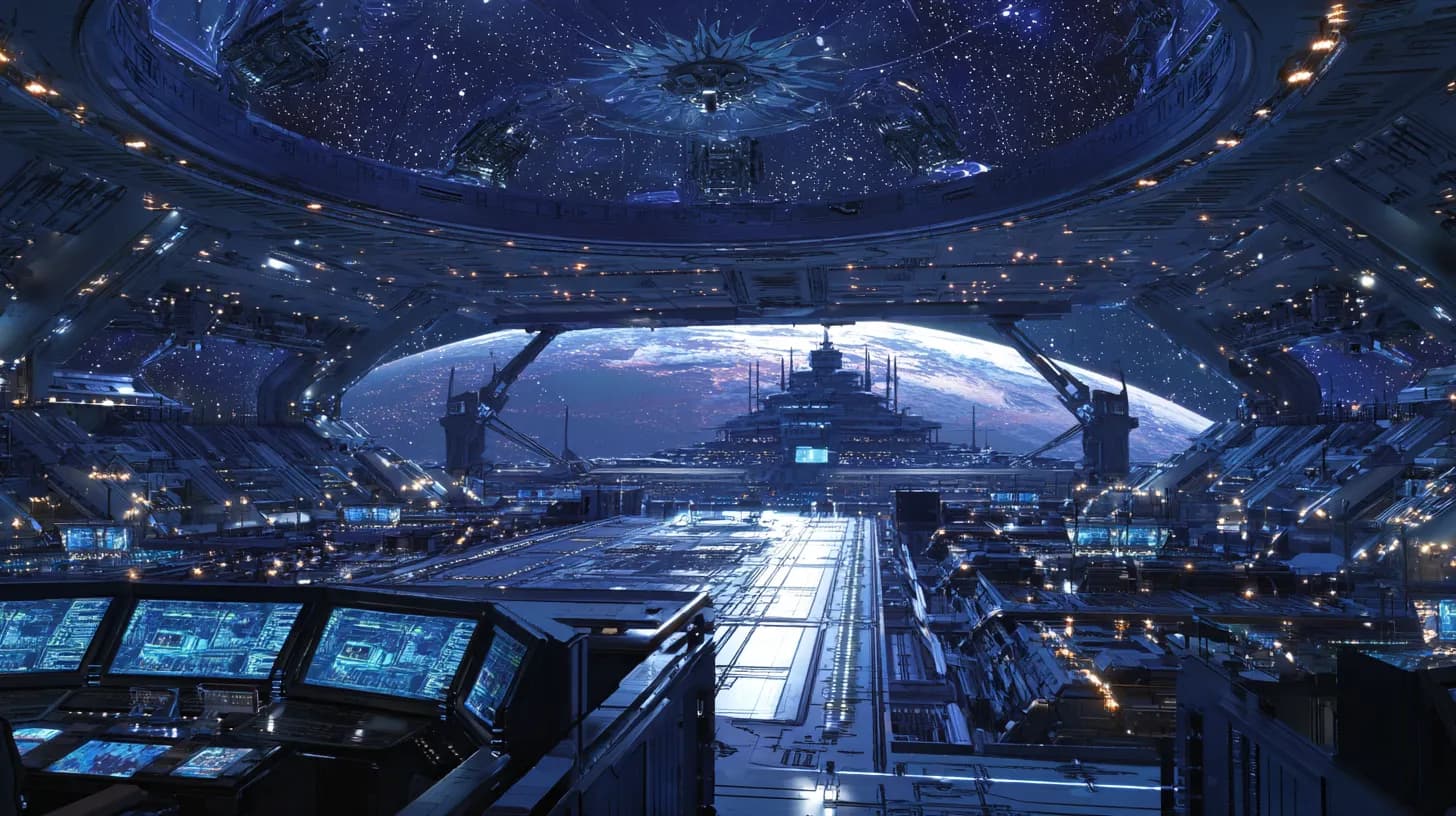
The Galactic Empire arose from humanity's expansion across the galaxy, which began with the colonization of Earth's neighboring star systems. Over thousands of years, human settlements spread to every habitable world, eventually consolidating under a single government centered on Trantor.
At its height, the Empire encompassed 25 million inhabited worlds with a population in the quadrillions. It represented the greatest achievement of human civilization—a unified galaxy where knowledge, culture, and commerce flowed freely between worlds.
Trantor: The Imperial Capital
Trantor, located near the galactic center, served as the Empire's capital and administrative hub. The entire planet was covered by a single city—an ecumenopolis—housing 40 billion people. The planet imported food from 20 agricultural worlds and generated waste heat only barely managed by massive cooling systems.
Trantor symbolized both the Empire's grandeur and its fragility. A planet that could not feed itself, dependent on a galaxy-spanning supply chain—any disruption could prove catastrophic.
The Decline
Asimov's Empire echoes the fall of Rome: it did not collapse overnight but decayed over centuries. The Periphery—worlds far from Trantor—began to drift away first. Technology was lost on outlying worlds, trade diminished, and the Imperial bureaucracy became increasingly corrupt and inefficient.
Seldon's psychohistory predicted that the Empire would fall completely within 500 years, leading to 30,000 years of barbarism. This prediction—and the plan to mitigate it—forms the foundation of the entire Foundation series.
Legacy
Even after its fall, the Galactic Empire cast a long shadow. The Foundation's early crises involved remnants of Imperial power, and the memory of Imperial unity served as both an inspiration and a cautionary tale. The goal of the Seldon Plan was ultimately to create a Second Empire—one built on stronger foundations than the first.