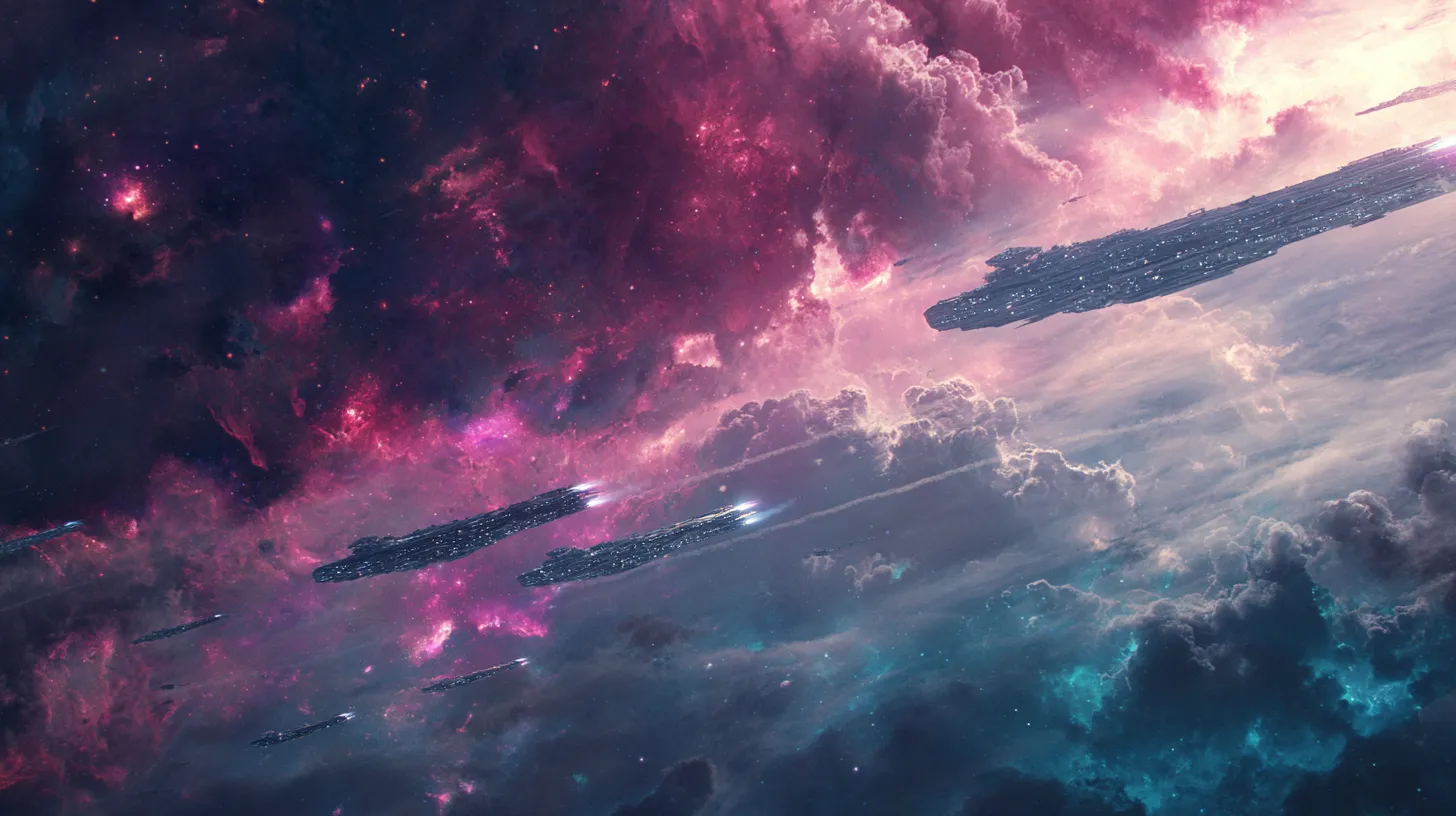
Robots and Empire
by Isaac Asimov
Robots and Empire (1985) bridges the Robot and Empire/Foundation series. Set 200 years after Baley's death, R. Daneel and R. Giskard develop the Zeroth Law of Robotics while preventing Earth's deliberate contamination with radiation, setting the stage for the Galactic Empire.
Published
1985
Pages
383
Pub. Order
#12
Chron. Order
#5
Synopsis
Set approximately 200 years after The Robots of Dawn, Elijah Baley has died of old age but his legacy lives on. R. Daneel Olivaw and his partner R. Giskard Reventlov discover a plot by Spacer extremists to contaminate Earth's crust with radiation, making the planet uninhabitable over generations.
Giskard, who has developed telepathic abilities, formulates the 'Zeroth Law of Robotics': a robot may not harm humanity, or through inaction allow humanity to come to harm. This law supersedes all three original Laws. Giskard allows Earth to be slowly irradiated — reasoning that this will force Earthpeople to colonize the galaxy, ensuring humanity's long-term survival. The paradox destroys Giskard, but he transfers his telepathic abilities to Daneel before dying.
Reader's Guide
How the Book Is Built
Robots and Empire (1985) is set about two centuries after The Robots of Dawn. Elijah Baley is long dead. Earth's people, following his argument, have begun settling new worlds as the "Settlers," while the Spacers watch their own fifty worlds stagnate.
The main characters are Gladia, now very old by human standards, and her two robots, R. Daneel Olivaw and R. Giskard Reventlov. When the Auroran roboticist Kelden Amadiro and his allies set a plan in motion against Earth, the two robots have to decide what the Three Laws allow them to do about it, and whether the Laws are enough.
What to Watch For
The Zeroth Law. This is the book where Daneel and Giskard reason their way to a law above the First: a robot may not harm humanity, or, by inaction, allow humanity to come to harm. The idea is thrilling and dangerous, because deciding what is good for humanity lets a robot override the interests of individual humans. Asimov takes the danger seriously.
The bridge. The book explains why Earth becomes radioactive, why the Spacers fade, and why the galaxy is settled by Earth's descendants instead. It connects the Robot novels to the Empire novels, and ultimately to the Foundation.
Daneel's long road begins. By the end, Daneel has taken on a task that will last twenty thousand years. Readers of Prelude to Foundation and Foundation and Earth will recognize exactly where he is headed.
Settlers and Spacers. Watch the contrast between the energetic, crowded Settler worlds and the elegant, exhausted Spacers. It is a portrait of a civilization choosing decline.
Where It Fits and Who It's For
Read it after The Robots of Dawn. It is the last Robot novel and the one most directly connected to the Foundation series. If you are reading everything, it is the natural bridge to the Empire novels or to the Foundation prequels.
It is less of a mystery than the Baley books and more of a political and philosophical novel. Its ideas about machine ethics have aged remarkably well.
On Screen
No adaptation exists. The Apple TV+ series draws on its ideas, though: the show's Demerzel is a robot who has lived for thousands of years under hidden rules, and Season 3 reveals that Daneel is one of her names.
Key Themes
Key Characters
R. Daneel Olivaw
Now 200 years old, begins his millennia-long mission
Historical Context & Writing Background
Written to explicitly bridge the gap between the Robot and Foundation series. Published in 1985 by Doubleday), the Zeroth Law concept became central to Asimov's later vision and has been widely discussed in AI ethics scholarship.
Critical Reception
Praised for its philosophical depth and for successfully connecting Asimov's separate series. According to the Encyclopedia of Science Fiction, the Zeroth Law is considered one of Asimov's most important ethical contributions to science fiction, influencing contemporary debates about AI alignment.
Connection to Asimov's Universe
The most critical bridge novel in Asimov's universe. The Zeroth Law motivates everything Daneel does for the next 20,000 years — creating Gaia, guiding Hari Seldon, and shaping the Foundation saga. Earth's radioactivity, established here, is referenced in 'Pebble in the Sky' and 'Foundation and Earth.'
Read more on WikipediaFrequently Asked Questions About Robots and Empire
What is the Zeroth Law of Robotics?
The Zeroth Law states: 'A robot may not harm humanity, or, by inaction, allow humanity to come to harm.' It supersedes all three original Laws by prioritizing the survival of humanity as a species over any individual human. Giskard formulates it in this novel, and Daneel uses it to guide his actions for the next 20,000 years.